

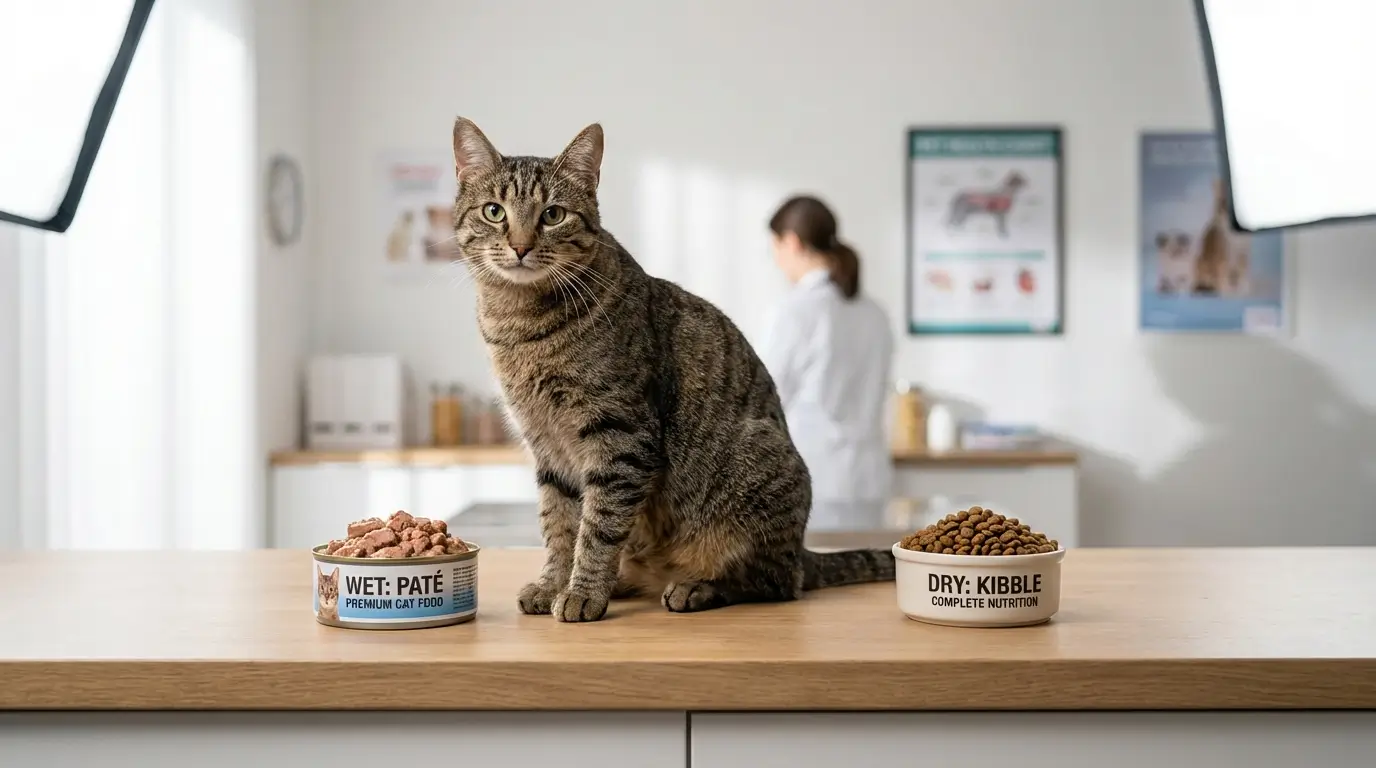
If your cat is screaming at the food press and you’re standing there wondering “wet vs dry food for cats – which is actually better?”, you’re not alone. The wrong choice can mean weight gain, urinary problems, or just a fussy cat who walks away from the bowl.
Here’s the good news: you don’t have to pick a “team”. Once you understand how wet and dry foods differ in moisture, protein, carbs and calories, you can build a diet that actually suits your cat’s age, health and lifestyle. Let’s break it down in plain English.
Wet vs dry food for cats: which is healthier overall?
Cats are desert animals at heart. They’re built to get most of their water from prey, not a water bowl. That’s why vets often lean towards wet food for health, especially for indoor cats and those prone to urinary or kidney issues. Wet food usually contains around 70–80% moisture compared with 6–10% in dry food.[1]
That extra water helps dilute the urine and can lower the risk of crystals and urinary blockages, particularly in male cats.[1] For cats with kidney disease or a history of urinary problems, most vets in practice will recommend at least some wet food, if not an entirely wet diet, to support hydration.
That said, dry food isn’t “bad” by default. A good-quality dry food can still be complete and balanced, convenient and affordable. For some cats, especially those who graze happily and stay lean, a dry-based diet can work well. The key is choosing a food that fits your cat’s health, not just your cupboard space.
So, is wet or dry food better for cats in general? For most healthy, indoor, neutered cats prone to weight and urinary issues, a wet-heavy or mixed diet is usually the safer bet. For active, outdoor, lean cats, a sensible mix of both can be perfectly healthy.
What actually differs: protein, carbs and moisture
On the label, wet and dry foods can both say “complete and balanced”, but the nutrient profile is often quite different. The biggest difference is moisture: wet foods are mostly water, while dry foods are concentrated calories.
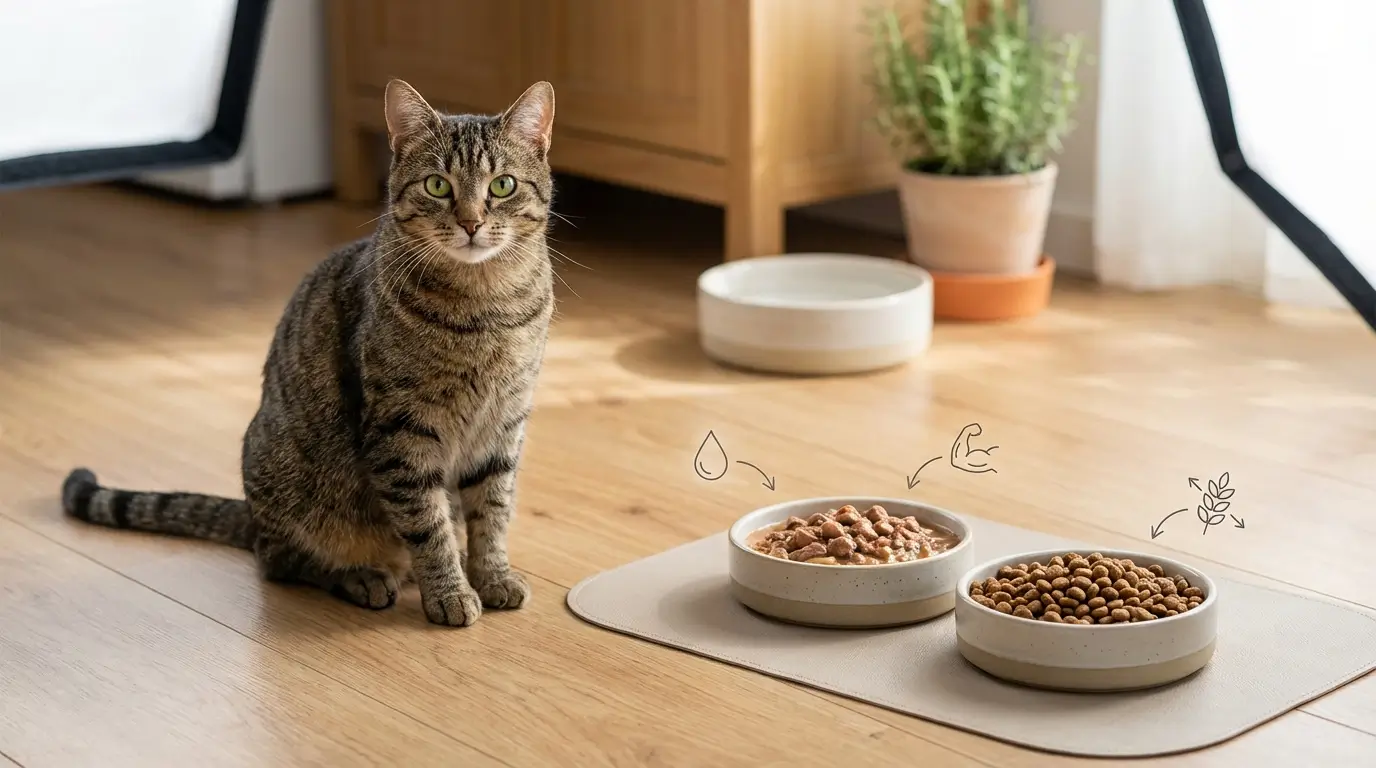
Once you adjust for that water, dry food typically has:
- More calories per gram – easy to overfeed
- Usually more carbohydrates to allow kibble to hold its shape
- Similar or sometimes higher protein on a dry-matter basis, depending on the brand
Cats don’t have a dietary requirement for carbohydrates, and high-carb diets may contribute to obesity and diabetes in some cats.[2] Many dry foods, especially budget ones, are heavier in carbs than wet foods. Wet foods, particularly meat-rich ones, tend to be closer to the high-protein, high-moisture profile of natural prey.
In my experience, the practical takeaway is this: if your cat struggles with their weight or blood sugar, look closely at the carb content of their dry food and consider shifting more of their calories to high-protein wet food. If your cat is lean and healthy, the exact carb percentage matters less, as long as total calories are controlled.
Weight, teeth and urinary health: real pros and cons
When we talk about wet vs dry food for cats, three big health areas keep coming up: body weight, teeth, and the urinary tract. Each food type has its own strengths and weaknesses.
Weight and obesity
Dry food is energy-dense and easy to pour… and overpour. Many cats become overweight simply because they’re free-fed dry food and the daily calories creep up. Cat obesity from dry food is usually about portion control, not that dry food is inherently “fattening”.
Wet food is bulky with fewer calories per gram, so cats often feel fuller on fewer calories. That’s one of the key benefits of wet food for cats who need to slim down. Studies suggest wet diets can help with weight management by increasing satiety and lowering total calorie intake.[3]
Teeth and dental health
There’s a common belief that dry food “cleans the teeth”. Regular supermarket kibble doesn’t do much for cat dental health; most biscuits shatter rather than scraping along the tooth surface.[4] Some specific dental diets are designed to help, but normal dry food is not a substitute for tooth brushing.
Urinary and kidney health
This is where wet food really shines. Higher moisture intake means more dilute urine, which can reduce the risk of crystals and stones.[1] There’s good evidence that urinary health and wet cat food are linked; increasing water intake is a standard part of managing feline lower urinary tract disease.
In short:
- Wet food: better for hydration and often for weight control; neutral for teeth
- Dry food: convenient and calorie-dense; some special formulas help teeth, but standard kibble doesn’t “brush” them
Mixed feeding cats wet and dry: how to do it safely
You don’t have to choose one or the other. Mixed feeding cats wet and dry can give you the best of both: hydration and palatability from wet food, with the flexibility and cost benefits of dry.
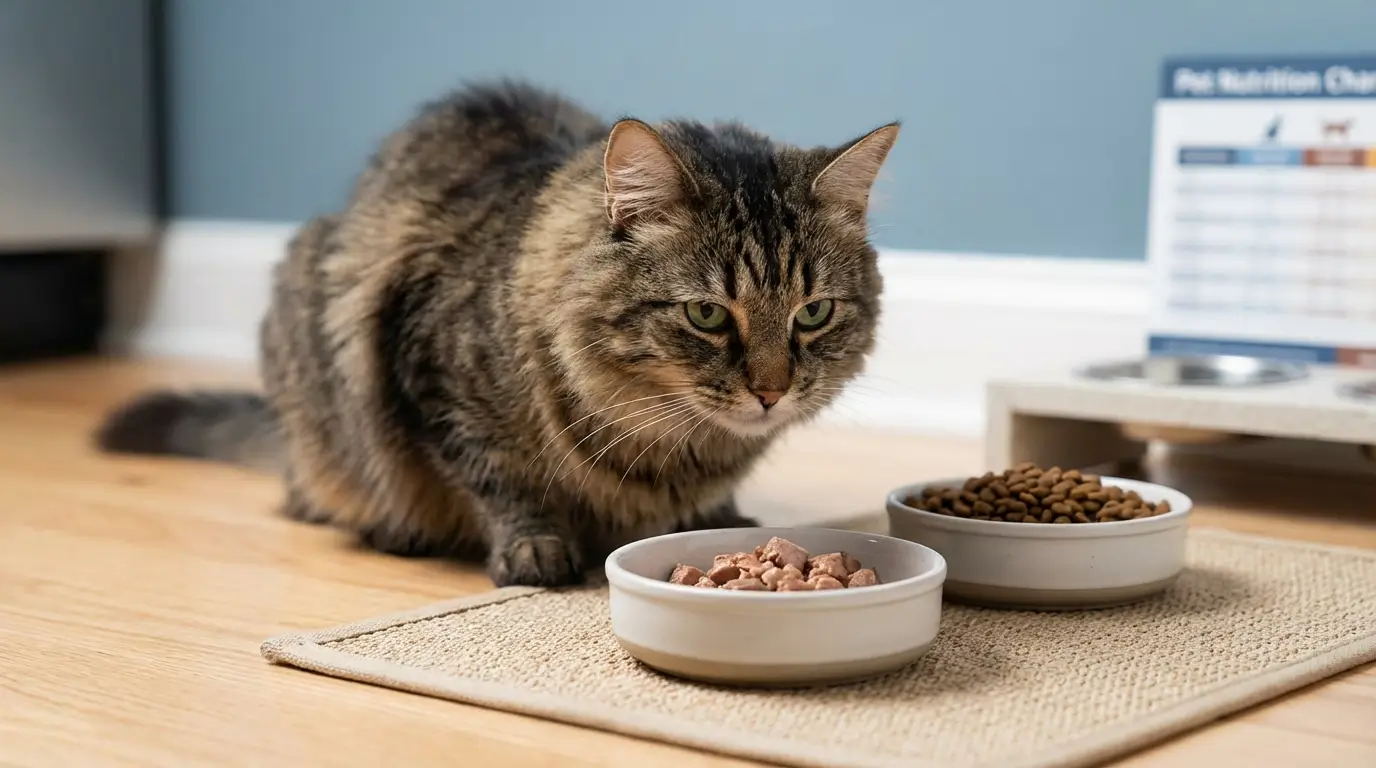
The big mistake I see is people adding wet food on top “for a treat” but never reducing the dry. That’s a straight road to weight gain. To do mixed feeding properly, decide how much of your cat’s daily calories you want from each.
A simple starting point:
- Aim for at least 50% of calories from wet food for most indoor cats
- Use the feeding guides on both foods, but feed for your cat’s ideal weight, not their current overweight weight
- Split the allowance into several small meals if possible – cats are natural nibblers
If you want to get more precise, you can calculate calories (kcal) from the packets and aim for a total of roughly 40–60 kcal per kg of your cat’s ideal body weight per day, adjusting based on activity and body condition.[5]
Keep an eye on:
- Weight: feel for a waist and ribs; adjust portions every couple of weeks if needed
- Stools: sudden changes can mean the new balance isn’t suiting them
- Water intake: mixed feeding often means they’ll drink a bit less – that’s fine, as long as they’re eating enough wet food
Life stages: kittens, indoor adults and senior cats
The best diet for indoor cats isn’t the same as the best diet for a 12-week-old maniac or a sleepy 14-year-old. Wet vs dry food for cats plays out differently depending on age and lifestyle.
Kittens
Kittens need more calories, protein and certain nutrients like DHA for brain development.[2] Both wet and dry kitten foods are fine, as long as they’re labelled “complete” and specifically for kittens.
In practice, I like a mixed approach for kittens:
- Wet food for hydration and palatability
- Dry food available for small, frequent meals (unless they’re overeating)
This also makes life easier later if you need to transition them between wet and dry food for medical reasons – they’ll already accept both textures.
Indoor adult cats
Indoor, neutered cats move less and are at higher risk of weight gain and urinary issues.[1][3] For these, a wet-heavy or fully wet diet is often the best diet for indoor cats, with a measured amount of dry if you like the convenience.
Senior cats
Older cats are more prone to kidney disease, dental problems and weight loss. Wet food is usually easier to chew, more aromatic and supports hydration – all big pluses. Many seniors do well on a mostly wet, high-quality senior or kidney-support diet, with a little dry if they enjoy crunch.
Transitioning cats between wet and dry food
Cats can be suspicious of change. Transitioning cats between wet and dry food needs patience, especially if you’ve got a hardcore kibble addict or a wet-food purist. The rule of thumb is slow and steady over 7–14 days.
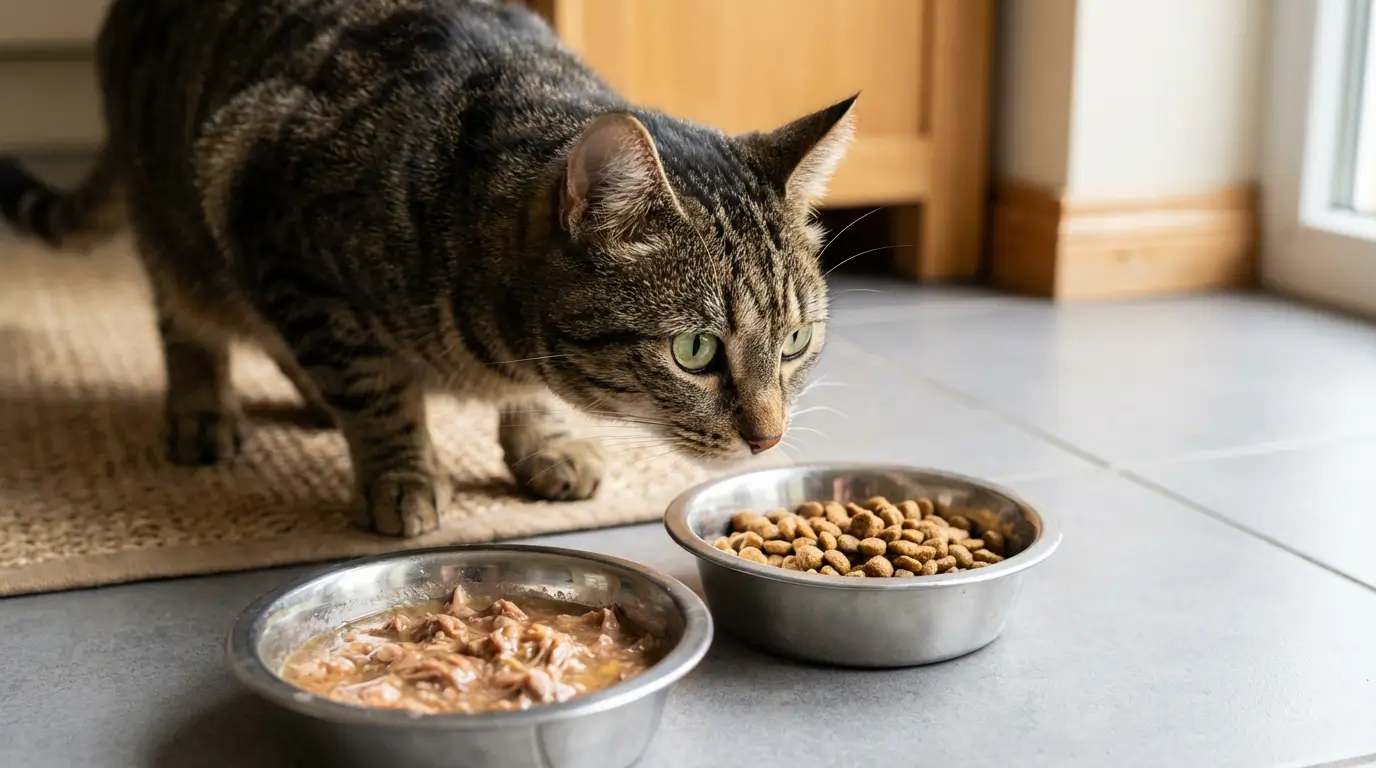
To move from dry to wet:
- Day 1–3: 75% old dry, 25% new wet (by calories)
- Day 4–6: 50% dry, 50% wet
- Day 7–10: 25% dry, 75% wet
- Day 11+: fully on your new balance
To move from wet to dry, just reverse the ratios. For fussy cats, you can:
- Warm wet food slightly to boost smell
- Add a teaspoon of warm water or a little bit of the “old” food as a topper
- Offer small amounts often, and remove uneaten food after 20–30 minutes
If your cat has a medical condition like kidney disease, diabetes or a history of urinary blockage, talk to your vet before changing anything. They may recommend a prescription diet or a very specific wet-to-dry ratio.
How to decide what’s right for your cat
So, how much wet food vs dry cat food should you end up feeding? Start with four questions:
- Is my cat overweight, normal or underweight?
- Do they have any urinary, kidney or dental issues?
- Are they indoor, outdoor, or both?
- What can I realistically manage every single day?
As a rough guide:
- Overweight, indoor, or urinary-prone cats: mainly wet food; limited, measured dry
- Lean, active cats: mixed feeding is usually fine
- Kittens and seniors: at least 50% wet, and often more
Your next steps from here:
- Read our piece on indoor cat care to pair diet with enrichment and exercise
- Brush up on cat dental care so you’re not relying on kibble to clean teeth
- Book a weight and diet check with your vet or vet nurse – they’ll help you tweak portions and choose between brands
At the end of the day, there’s no single “best” answer to is wet or dry food better for cats. There’s just what’s best for your cat’s body and your routine. Aim for a high-quality, species-appropriate diet, keep an eye on weight and wee, and adjust as you go. Your cat will tell you the rest.
References: [1] International Society of Feline Medicine – Feline urinary tract health. [2] WSAVA Global Nutrition Committee. [3] AAHA/AAFP Feline life stage guidelines. [4] BSAVA Manual of Canine and Feline Dentistry. [5] WSAVA Calorie Needs Guidelines.

5 Common Dog Health Problems

10 Best Irish Pet Rescues 2024

Indoor Cat Risks in Irish Homes