

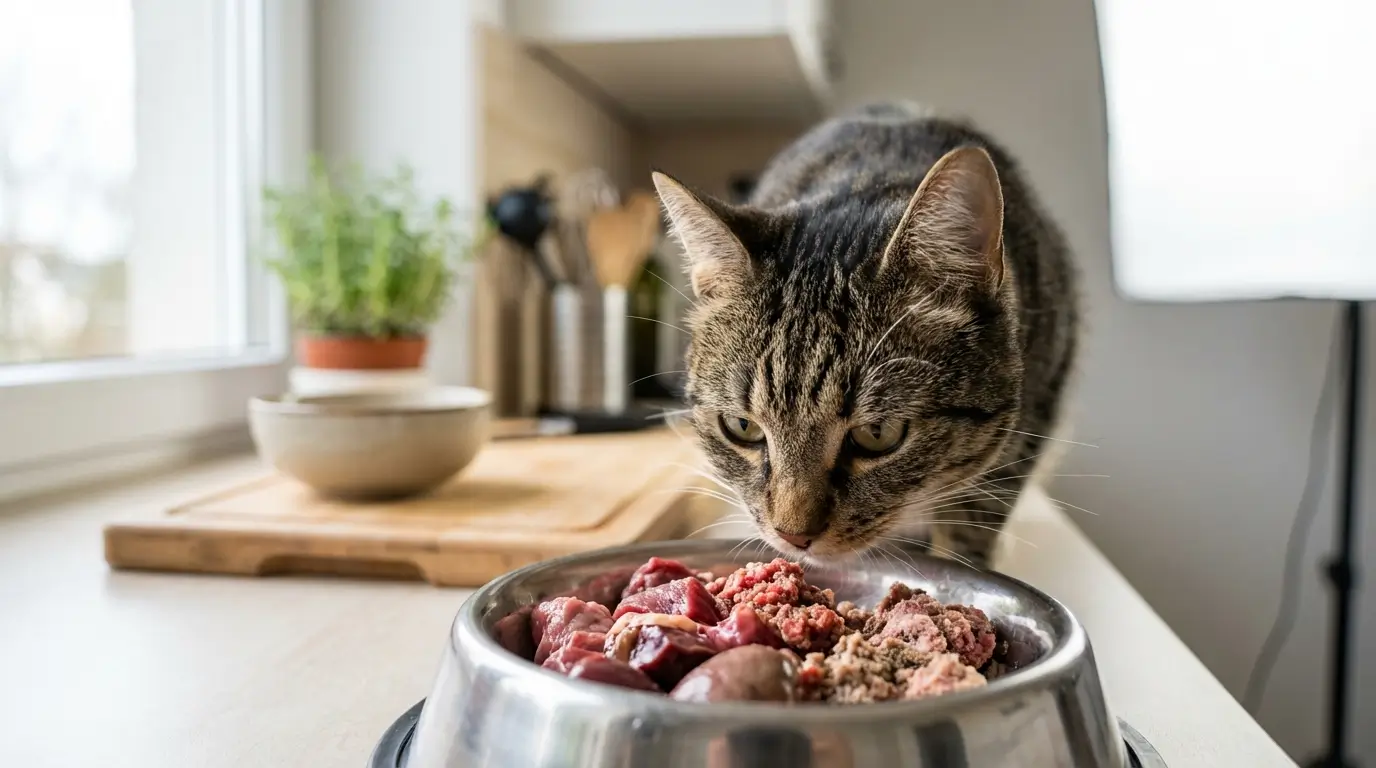
If your cat is turning their nose up at dry biscuits and you’re wondering about a raw food diet for cats, you’re not alone. More Irish owners are asking whether a “natural” raw diet is healthier – or a hidden health risk.
In this explainer, we’ll unpack what raw feeding for cats actually means, what the science and vets say about the pros and cons, which cats should avoid it, and how to reduce the risks if you do decide to go down the raw route.
What is a raw food diet for cats?
A raw food diet for cats is usually based on uncooked animal ingredients: meat, organs, bones, and sometimes raw egg or fish. It may be homemade raw cat food, a commercial frozen or freeze-dried product, or a mix of both. Some plans follow “prey model” ratios (meat–bone–organ), others add supplements or small amounts of veg.
This is very different from standard wet or dry food. Commercial foods are cooked at high temperatures, which kills most bacteria and parasites. They must also meet legally defined nutrient profiles, like FEDIAF guidelines in Europe, to be labelled as “complete”. With a raw diet for cats, especially if it’s homemade, that responsibility falls on you.
Raw cat diets are often sold on the idea of mimicking what wild cats eat. The logic is simple: cats are obligate carnivores, built to eat meat, so a raw animal-based diet must be better. The reality is more complicated. Your indoor cat isn’t a wild hunter, and modern vet medicine has given us a lot of information about what nutrients cats need across their lifetime.
Raw vs wet and dry: how do they really differ?
On a basic level, the ingredients in a raw food diet for cats are less processed. Meat and organs are usually frozen rather than cooked. Kibble (dry food) is heavily processed and extruded; wet food is cooked in sealed tins or pouches. Processing itself isn’t automatically bad – cooking kills harmful microbes and makes some nutrients more digestible – but it does change texture and flavour.
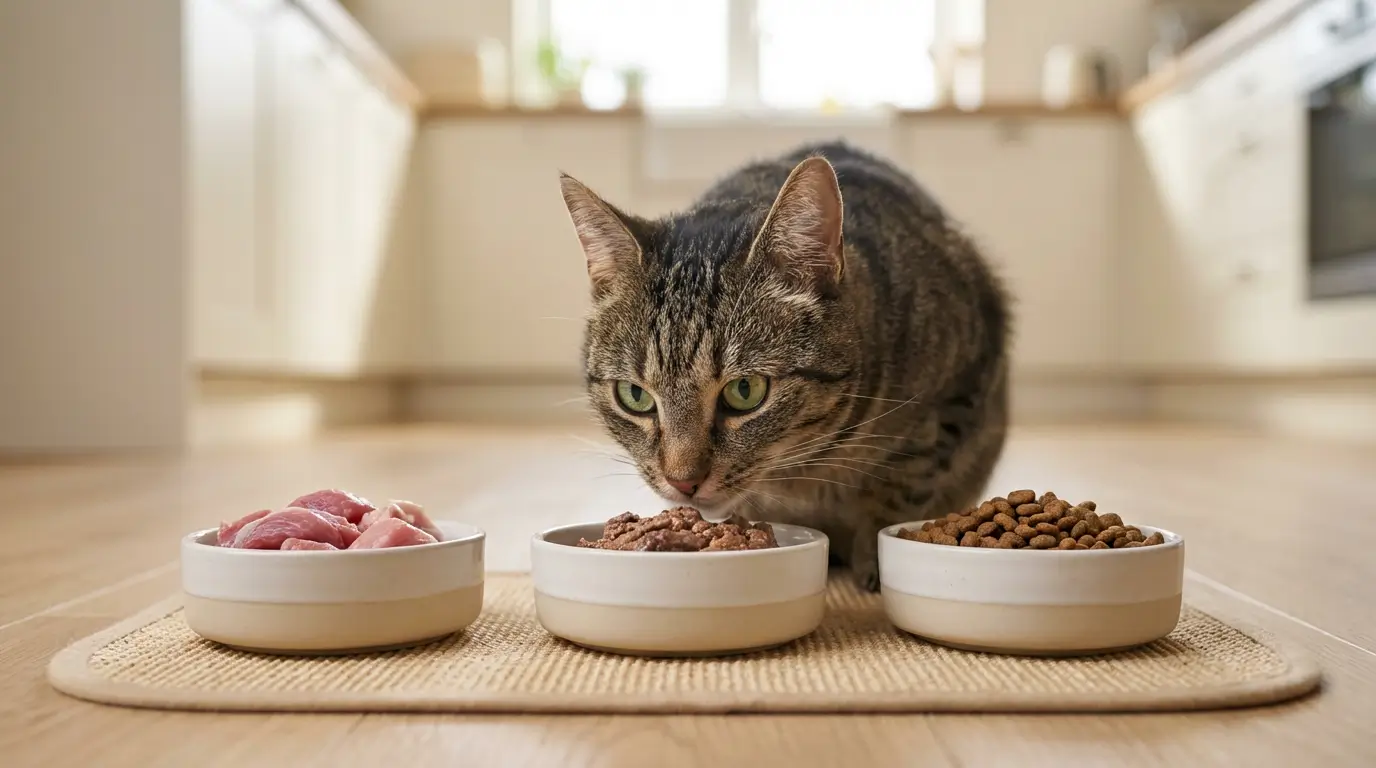
Nutritionally, a well-balanced raw diet for cats will be high in animal protein and fat with minimal carbohydrate. Many wet foods also fit that bill, especially the meatier ones, while dry foods often contain more starch to hold the kibble together. What really matters is whether the diet meets all of a cat’s essential needs: taurine, specific fatty acids, vitamins A and D, calcium, phosphorus and so on.
Many commercial raw products in Ireland are sold as “complementary”, meaning they’re not complete on their own and must be fed alongside another balanced food. Complete raw diets do exist, but you need to check labels very carefully. With homemade raw cat food, you’re responsible for including the right amount of bone, organ and added supplements. That’s much harder than it sounds without professional guidance.
Potential benefits of raw feeding for cats
There can be upsides to a carefully planned, balanced raw diet for cats, though research is still catching up. Most of the reported benefits are based on owner observations rather than large clinical trials.
Commonly reported positives include:
- High meat content: Raw diets are usually rich in animal protein, which suits cats’ biology as obligate carnivores.
- Lower carbohydrate: Many raw recipes contain very little starch, which may help some cats that gain weight easily on high-carb kibble.
- Palatability: Some fussy eaters do better on strong-smelling, meaty raw food.
- Dental texture: Chewing on larger pieces of meat or raw meaty bones may help mechanically clean teeth, though this is not a substitute for proper dental care.
There are also surveys suggesting improved stool quality and coat condition in some raw-fed pets, but these are mostly owner reports rather than controlled studies.[1] It’s hard to separate the effect of more meat and moisture (which you can get from a good wet food) from the effect of being raw.
So yes, there can be rewards to a well-thought-out raw diet, but they mainly come from high-quality animal protein and appropriate moisture and calories – all of which are also achievable with well-formulated cooked diets.
Risks and downsides: what vets are worried about
This is where we need to be very honest. When vets are asked, “Is raw food safe for cats?”, there are two big concerns: nutritional imbalance and microbial contamination. Both are backed up by real-world data.
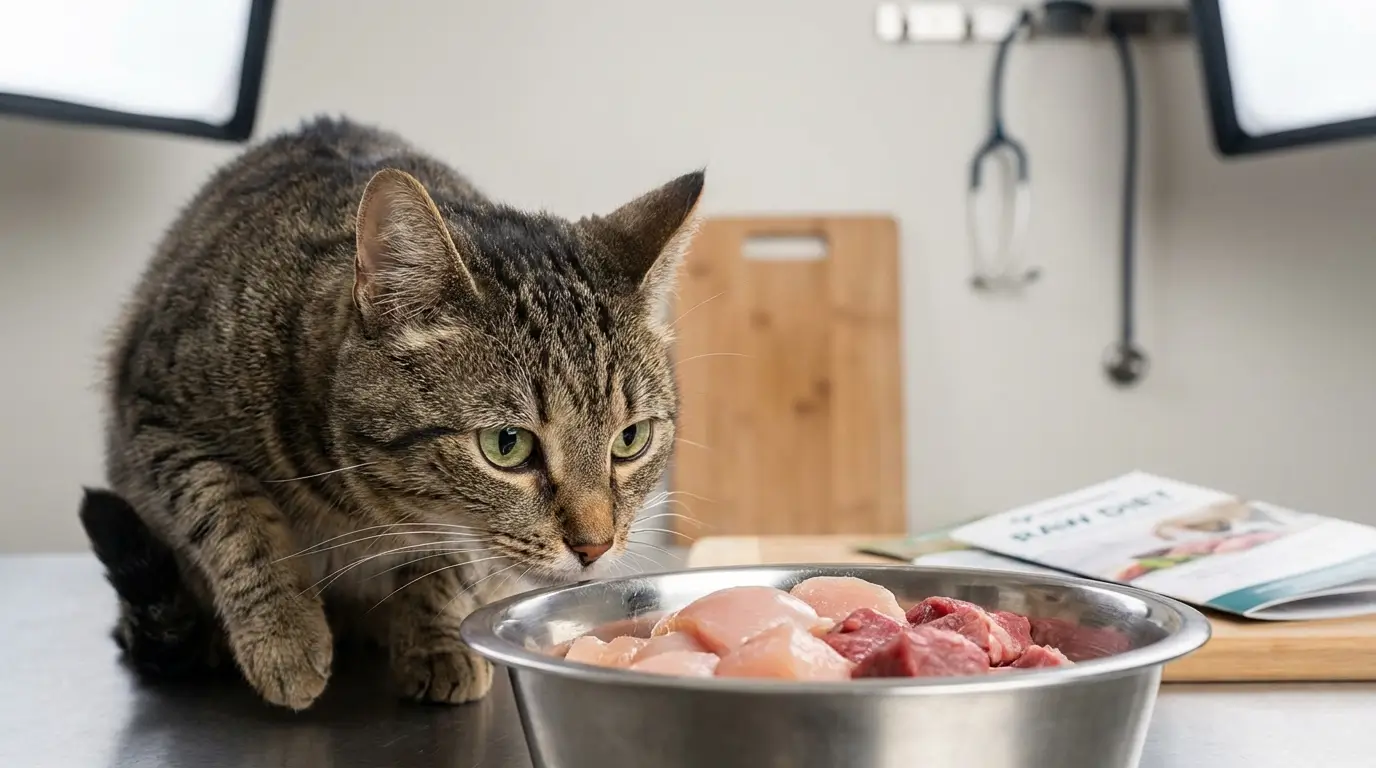
Multiple studies of homemade and commercial raw diets have found a high rate of nutrient problems – too little calcium, taurine or essential fatty acids, or too much vitamin A, for example.[2] Over time, these imbalances can cause serious issues like bone deformities, heart disease, blindness, or painful joint and spine changes.
On the infection side, raw meat is frequently contaminated with bacteria such as Salmonella, Campylobacter and E. coli. A 2017 study of raw pet foods in Europe found pathogenic bacteria in a significant proportion of samples.[3] Cats may not always look sick but can shed these bugs in their poo and around the home, which is a problem for babies, elderly people, or anyone with a weakened immune system.
There’s also the risk of bones. Raw bones can cause broken teeth, constipation from bone fragments, or life-threatening obstructions and perforations of the gut. And finally, practical downsides: raw diets are often more expensive, take up freezer space, and are less convenient than opening a pouch of balanced wet food.
Which cats should avoid raw diets?
Raw feeding for cats is not appropriate for every animal. Some groups are much higher risk, and most vets will recommend avoiding raw entirely for them.
High-risk cats include:
- Kittens: A raw diet for kittens is particularly risky. Growing bodies have zero wiggle room for nutrient gaps, and infections hit them harder. If a raw diet is considered, it should be under direct veterinary and nutritionist supervision.
- Senior cats: Older cats often have kidney disease, dental problems or other chronic conditions that need very specific nutrition. The infection risk is also higher as their immune system weakens.
- Immunocompromised cats: Cats with FIV, FeLV, on long-term steroids, chemotherapy, or with other immune issues should not be eating raw meat because they’re more likely to become seriously ill from bacteria or parasites.
- Cats in high-risk households: Even if your cat is healthy, raw feeding is generally discouraged if anyone in the home is pregnant, under five, elderly or immunocompromised.[4]
Cats with a history of pancreatitis, severe food allergies, or gastrointestinal disease also need great care. Some can do well on carefully chosen high-meat cooked diets without taking on the extra infection risk of raw. Always speak to your vet before changing diet in a cat with existing health problems.
Making a raw diet safer and nutritionally balanced
If, after hearing the risks, you still want to explore a raw food diet for cats, the priority is to make it as safe and balanced as possible. This is not a project to tackle with random internet recipes.
Key steps:
- Work with your vet first: Ask for veterinary advice on raw diets specific to your cat’s age, weight, and medical history. In some cases they may refer you to a veterinary nutritionist.
- Prioritise “complete” products: If you’re using commercial raw, choose products clearly labelled as “complete” and compliant with FEDIAF or equivalent standards, and made by reputable manufacturers who test for pathogens.
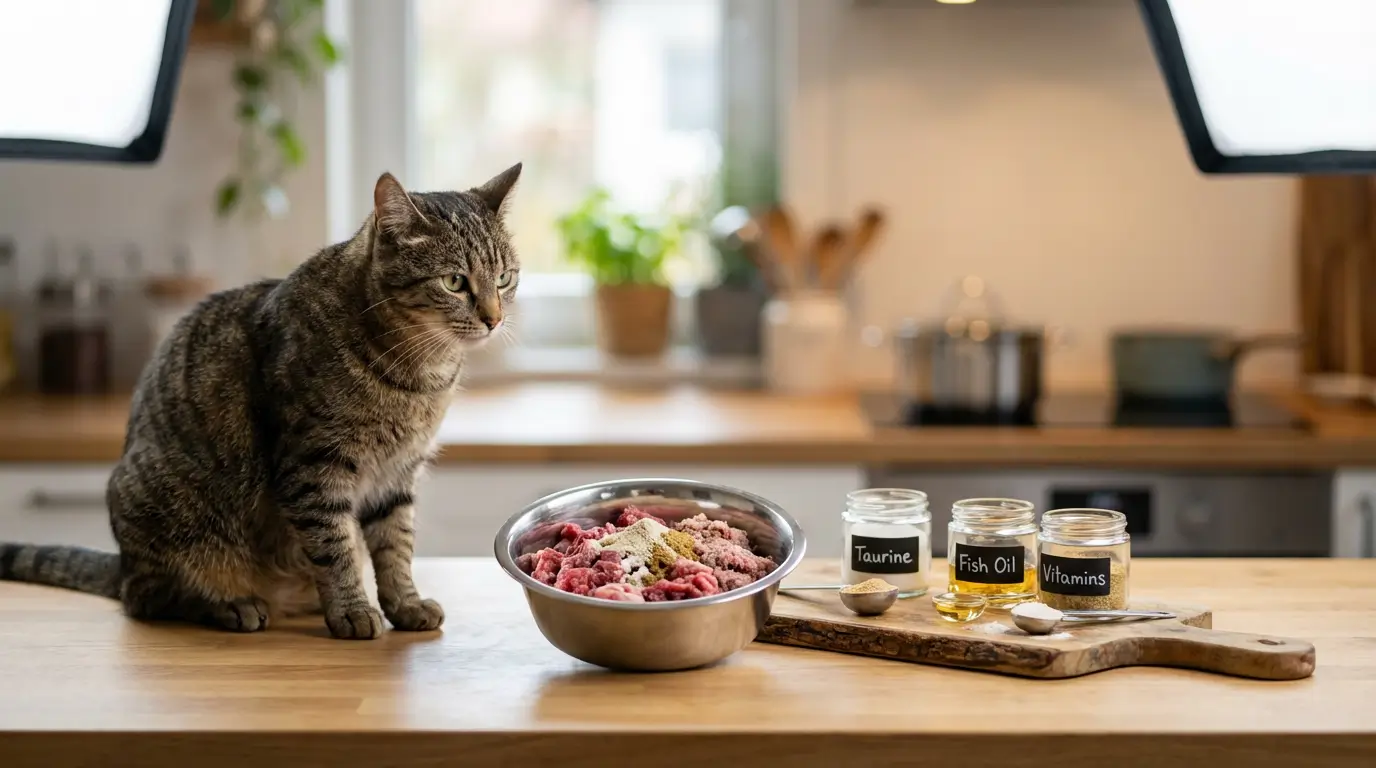
- Don’t wing supplements: With homemade raw cat food, nutrients like taurine, calcium, vitamin D and copper must be carefully calculated. A nutritionist-formulated recipe is essential; improvised cat raw food recipes online are a common cause of deficiency.
- Avoid weight creep: Raw food can be calorie-dense. Weigh portions, monitor your cat’s body condition every couple of weeks, and adjust as needed.
Also remember that you don’t have to go “all or nothing”. Some owners use a small amount of raw as a topper alongside a complete wet food base diet, which may limit some risk while keeping overall nutrition more predictable.
Hygiene rules and practical tips for switching to raw
If you decide that switching cats to raw food is right for your household, strict hygiene is non-negotiable. Treat raw cat food as you would raw chicken you’re about to cook – except the cat is the one eating it.
Basic hygiene rules include:
- Store raw food frozen; defrost in the fridge, never on the counter.
- Use separate chopping boards and utensils for pet food.
- Wash hands, bowls, surfaces and cat food prep areas with hot soapy water after every use.
- Discard leftovers after 20–30 minutes at room temperature.
- Clean litter trays frequently, ideally with gloves, and keep them away from food prep areas.
To move from dry or wet food to raw, change gradually over 7–10 days. Start by mixing a small amount of raw with their usual food and slowly increase the proportion. Watch for vomiting, diarrhoea, excess gas, or refusal to eat. If anything looks off, pause and speak to your vet.
It’s also worth revisiting the bigger picture. A high-quality wet or dry diet that meets all your cat’s nutritional needs, plus regular vet checks and dental care, will give most pets an excellent quality of life. If you’re unsure, compare options and learn about other diet types, like high-meat wet foods or mixed feeding, before committing long term.
Putting it all together: is raw worth it?
A raw food diet for cats can be done more safely, but it’s never risk-free. The rewards – more meat, fewer carbs, good palatability – are real, yet mostly achievable with cooked complete diets too. The risks – bacterial contamination, nutrient imbalance, and bone injuries – are well documented and taken seriously by vets and public health bodies.[4]
If you’re tempted by raw feeding for cats, the sensible path is:
- Talk frankly with your vet about your cat’s health, your household, and your level of commitment.
- Decide whether the potential benefits outweigh the added infection and nutritional risks for your situation.
- If you go ahead, use properly formulated, complete products or nutritionist-approved recipes, and be obsessive about hygiene.
Your cat doesn’t care whether their dinner is raw or cooked; they care that it’s tasty, safe, and nutritionally complete. Whichever route you choose, make that your north star – and get professional support rather than relying on social media anecdotes.
Always consult your own vet before making major changes to your cat’s diet, especially for kittens, seniors, or cats with existing medical conditions.
Further reading

5 Common Dog Health Problems

10 Best Irish Pet Rescues 2024
Indoor Cat Risks in Irish Homes