

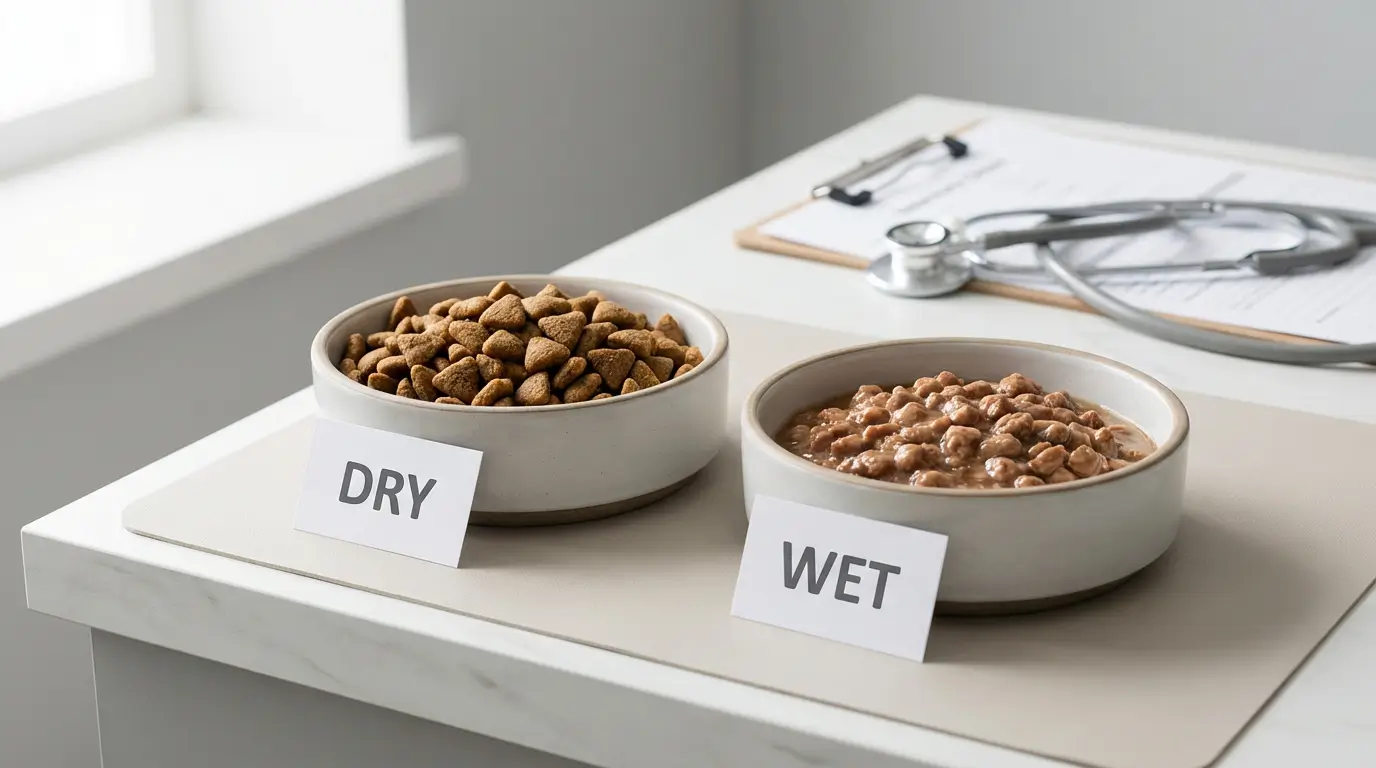
If you’re staring at a bag of kibble in one hand and a stack of tins in the other wondering what your dog or cat actually should be eating, you’re not alone. The dry food vs wet food for pets debate confuses most owners.
This breakdown walks through how dry and wet foods compare for health, cost, storage, teeth, weight and digestion, plus when mixed feeding makes sense. By the end, you’ll know how to pick what’s right for your pet, not just what’s on special offer this week.
Dry vs wet food: what actually matters?
Before we dive into dry vs wet dog food and cat food, it’s important to park one myth: the format (kibble vs pouch/tin) is less important than the overall recipe and whether it suits your animal. A complete food must legally meet your pet’s basic nutritional needs, whether it’s dry or wet.[1]
So the real questions are:
- Does it meet FEDIAF/AAFCO standards for complete diets?
- Is the protein, fat and energy level appropriate for age, size and activity?
- Does it suit your pet’s medical conditions (kidneys, gut, allergies, teeth)?
- Will your pet actually eat it, day in, day out?
In my experience, the healthiest option is usually the one that ticks those boxes and that your household can realistically afford and manage. For some families that’s mainly dry food; for others, a mix of dry and wet works best.
Health comparison: is dry or wet better overall?
For healthy adult dogs and cats, both dry and wet complete foods can be perfectly adequate, as long as they’re good-quality and fed in the right amounts.[1] There’s no single answer to “is dry pet food better than wet?” – it depends heavily on the individual animal.

Wet foods usually contain 70–80% water. That higher moisture content helps support hydration, which is especially handy for cats, who are notorious for low thirst drives. The American Association of Feline Practitioners notes that increasing water intake can help in managing urinary tract issues.[2]
Dry foods are much more energy-dense and often higher in carbohydrates. That can be useful for very active dogs who need calories, but it’s also why overfed indoor cats and small dogs can gain weight quickly on free-access kibble. When owners measure portions carefully, both formats can maintain a healthy weight; when they don’t, it’s usually the dry food that gets blamed.
So, is dry or wet food healthier overall? For most healthy pets, they’re roughly equivalent when:
- The food is complete and balanced.
- Portions are weighed, not guessed.
- You adjust amounts to body condition, not just the bag chart.
Where wet food often has an edge is for cats with urinary or kidney disease and some dogs with certain bladder issues, because of the higher water intake. Always follow your vet’s recommendation for specific medical conditions.
Cost, storage and convenience: what suits your household?
From a purely practical point of view, dry food vs wet food for pets is often decided by budget and storage. Dry foods are generally cheaper per calorie and easier to keep.
Dry food pros for owners:
- Lower cost per day for most brands.
- Bulk bags are easy to store in a cool, dry place.
- Less mess, especially for dogs who fling food.
- Handy for puzzle feeders and training treats.
Wet food pros for owners:
- Pre-portioned tins/pouches make it easy to see how much you’re feeding.
- Highly palatable – useful for fussy eaters or sick pets.
- Great for adding medication (tablets often hide well in wet food).
On the downside, opened wet food needs refrigeration and should be binned after 24 hours. It also works out more expensive per calorie in most cases.[1] Dry food, once opened, gradually loses aroma and some nutrients if stored badly, so keep it:
- In the original bag, sealed, inside an airtight container.
- Out of direct sunlight and away from damp.
If you’re feeding multiple pets, travel a lot, or rely on automatic feeders, dry food usually wins for convenience. If you have one small dog or cat and plenty of fridge space, wet can be just as manageable.
Teeth, weight and digestion: pros and cons
The dental health dry food pets claim gets repeated a lot, but it’s only partly true. Ordinary kibble does not clean teeth in any meaningful way. The WSAVA Global Dental Guidelines state that specially designed dental diets can reduce plaque and tartar, but standard dry food has minimal effect.[3]
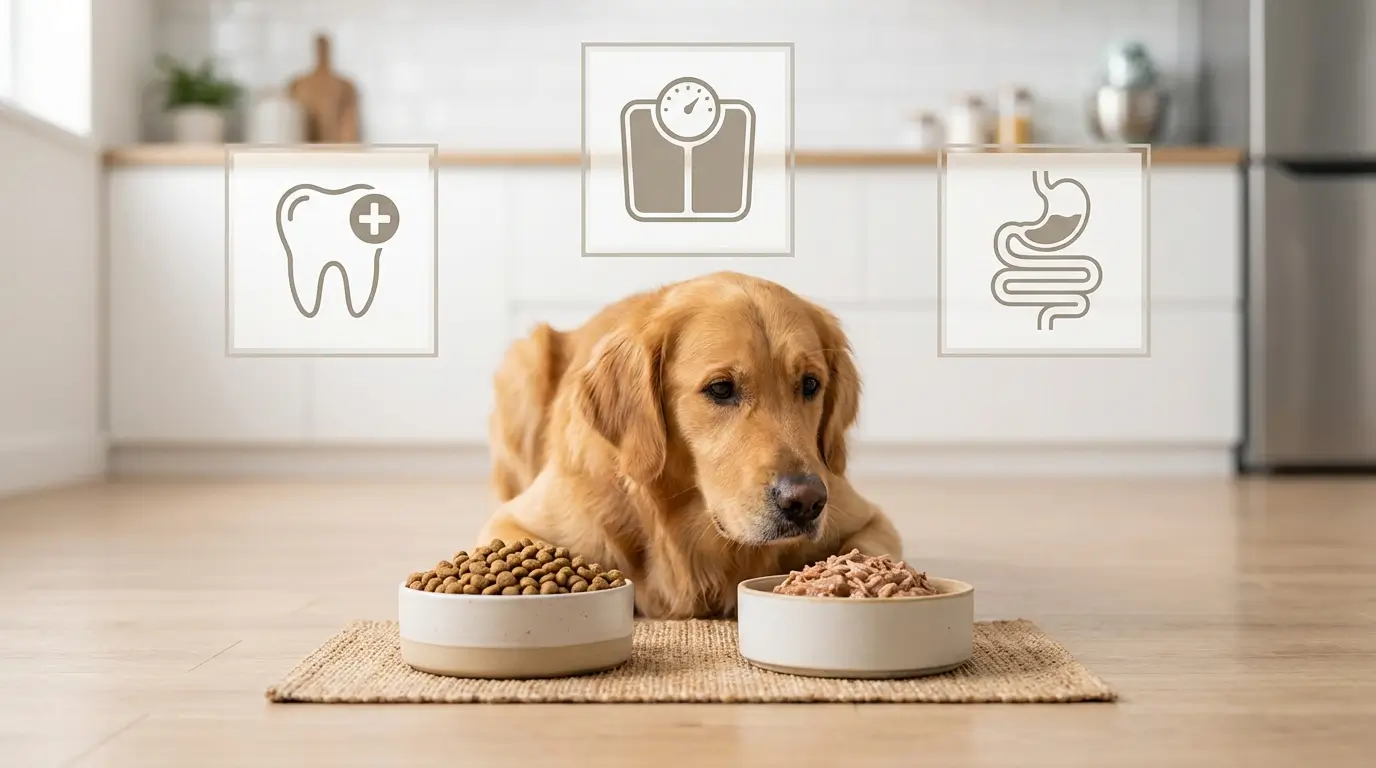
So, for dental health:
- Neither basic dry nor wet food is enough by itself.
- Tooth brushing (yes, even for cats), dental chews, and professional cleans are what really matter.
- Vet-recommended dental diets are useful for some pets, but they’re still only part of the plan.
On weight and obesity, the picture is clearer. Dry food is energy-dense, so it’s easy to overdo it, especially with free-feeding. The UK’s Pet Food Manufacturers’ Association estimates around half of UK pets are overweight.[1] That’s not dry food’s fault by itself, but measuring errors and treat extras add up fast.
Wet food’s high water content means you can feed a bigger-looking portion for fewer calories, which helps some owners and pets feel more satisfied. This can be a big plus for greedy dogs or indoor cats on a diet. However, you still need to read the calorie information and use scales.
For digestion, both dry and wet can be gentle or problematic depending on the recipe. Some pets with sensitive stomachs do better on:
- More digestible protein sources.
- Moderate fat levels.
- Added fibre or specific fibres (e.g. beet pulp, prebiotics).
In practice, that might be a dry sensitive-stomach formula or a simple, limited-ingredient wet diet. The key is consistency: avoid constant switching unless advised by your vet.
When mixed feeding is a smart option
Mixed feeding dogs and mixed feeding cats – using both dry and wet – is very common, and for many households it’s the sweet spot. You get some benefits of wet food (palatability, moisture) and some of dry (cost, convenience).
Mixed feeding can be a good idea when:
- Your pet loves wet food but it’s too expensive to feed exclusively.
- You want to boost water intake, especially for cats.
- You need dry food available for grazing, but also want a set mealtime routine.
- Medication is easier to give in a small amount of wet food.
To do it safely, you need to think about total calories, not just scoops and pouches. Here’s how:
- Pick complete foods (both dry and wet).
- Work out your pet’s daily calorie requirement with your vet or a reliable calculator.
- Decide what percentage will be dry vs wet (for example 50:50 by calories, not by volume).
- Use the feeding guidelines as a starting point, then reduce each so that the combined calories match your daily target.
If you change the mix suddenly, some pets may get softer stools. Gradually adjust over a week, increasing the wet or dry portion a little each day. For more on balancing portions and body condition, see our pieces on keeping your dog at a healthy weight and feeding fussy indoor cats on PetPal.ie.
Choosing for age, health and lifestyle
Different life stages and medical issues change the dry vs wet cat food and dog food equation. Here’s how to think it through.

Puppies and kittens
Puppies and kittens have high energy needs and small stomachs. Both dry and wet complete “growth” diets are appropriate, but:
- Very small breeds may struggle to crunch big kibble – tiny-bite dry or wet is easier.
- Wet food can be kinder for teething mouths.
- Mixing a little wet with dry often boosts appetite in fussy youngsters.
Adult, indoor and less active pets
For adult indoor cats and low-activity dogs, obesity risk is high. The benefits of wet pet food here are mainly:
- Higher water intake for cats, supporting urinary health.[2]
- Larger portion size for the same calories, helping them feel full.
That said, a carefully measured light or weight-management dry diet can work just as well. The priority is regular weighing, body condition scoring, and being honest about treats.
Senior pets and medical conditions
Older pets and those with chronic diseases often push the decision towards wet food:
- Kidney disease: vets frequently recommend wet or mixed feeding to boost fluid intake.[2]
- Dental pain: broken teeth or gum disease can make hard kibble uncomfortable.
- Reduced sense of smell: warmed wet food is more aromatic and tempting.
Conversely, some prescription dry diets are designed for specific conditions (e.g. certain gut issues, diabetes, urinary crystals). In these cases, form follows function: pick the diet your vet recommends, then decide whether you can add any wet component without upsetting the balance.
If you’re unsure how much wet food vs dry food to use for your individual pet, ask your vet nurse to help you draw up a simple feeding plan. They can factor in treats, chews and table scraps – the bits most of us forget.
So… what should you feed your pet?
There’s no one winner in the dry food vs wet food for pets debate. The “best” choice is the one that keeps your dog or cat at a healthy weight, produces good poo, fits their medical needs, and is realistic for your budget and routine.
As a quick checklist, your chosen food (dry, wet or mixed) should:
- Be labelled as a complete diet for your pet’s life stage.
- Come from a manufacturer that meets FEDIAF/AAFCO guidelines.[1]
- Keep your pet in ideal body condition (you can feel ribs, but not see them from across the room).
- Be something your pet eats happily without constant tummy upsets.
If any of those aren’t true right now, don’t panic. Make one change at a time, weigh your pet monthly, and keep notes. And if you have a pet with ongoing health problems, get your vet’s input before making major diet shifts – especially for kidney, liver, gut or endocrine disease.
Want help decoding labels and portion sizes? Have a look around PetPal.ie for more straight-talking nutrition pieces and practical feeding tips tailored to Irish pet owners.
“Complete and balanced commercial pet foods, whether wet or dry, are formulated to meet all essential nutrient requirements when fed as directed.”[1]
References
- [1] Pet Food Manufacturers’ Association (PFMA) & FEDIAF Nutritional Guidelines for Cats and Dogs.
- [2] American Association of Feline Practitioners (AAFP) – Feline Hydration & Urinary Tract Health resources.
- [3] WSAVA Global Dental Guidelines – World Small Animal Veterinary Association.

5 Common Dog Health Problems

10 Best Irish Pet Rescues 2024

Indoor Cat Risks in Irish Homes