

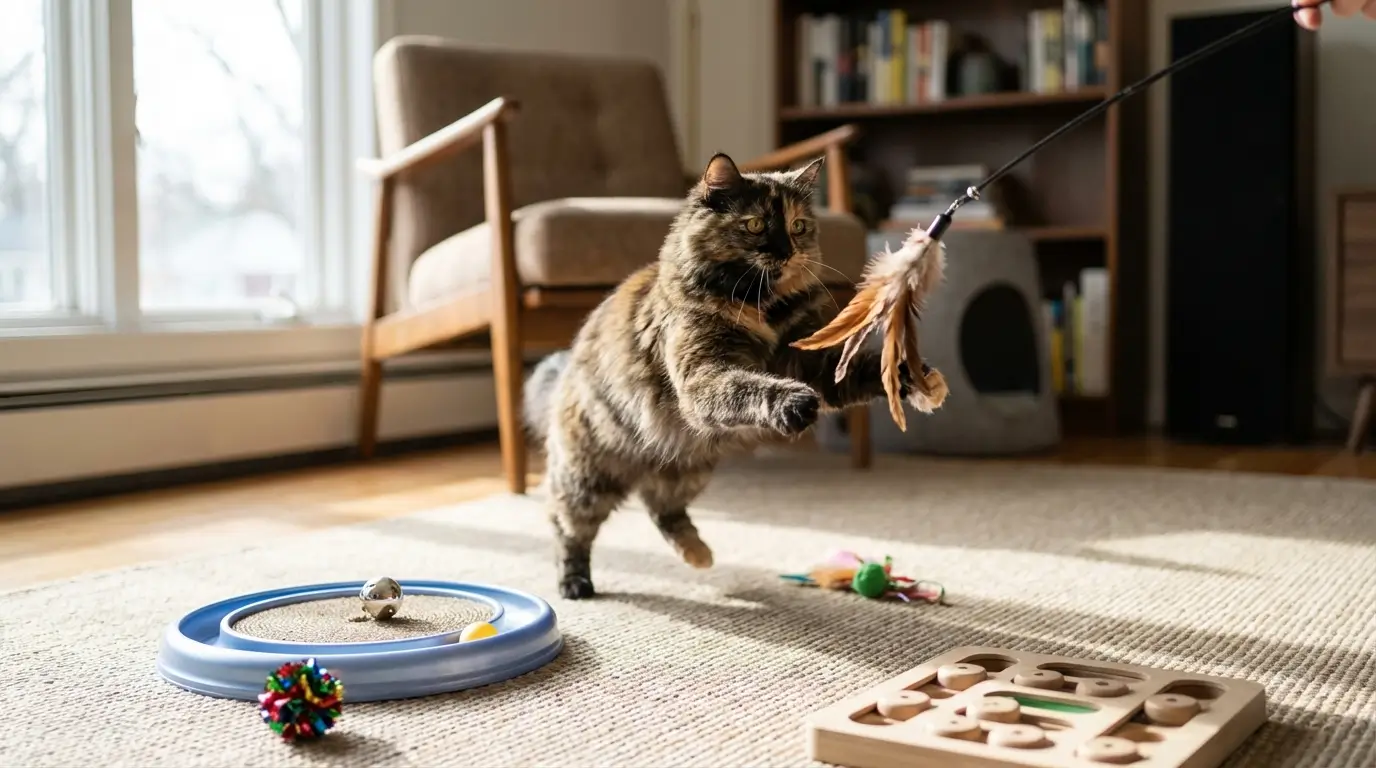
If your cat ignores every new toy within 24 hours, you are not alone – and you can fix it with a few small changes to what you buy and how you play.
Why toys matter for your cat’s health
Cats might sleep 12–16 hours a day, but the hours they are awake really matter. In the wild, a cat would spend a big chunk of that time hunting, climbing and problem-solving. Indoor cat toys are our way of replacing that lost “job”. When we don’t, boredom and frustration creep in.
There is good evidence that interactive cat toys and daily play reduce behaviour problems like aggression and night-time zoomies, and help keep weight under control.[1] Cats that get structured play, followed by a small meal, show calmer behaviour and fewer attention-seeking antics because we are mimicking the hunt–eat–groom–sleep cycle.
That said, it is not about filling a basket with random cat toys. It is about tapping into how cats are wired to stalk, chase and pounce. When toys match natural prey movements – darting, scuttling, fluttering – they are much more likely to be used regularly. We will look at which toys work best, how to use them, and how many you actually need.
Types of cat toys that actually get used
Most cats prefer toys that move like prey, not ornaments that just sit on the floor. In my experience, the best cat toys fall into a few clear categories:
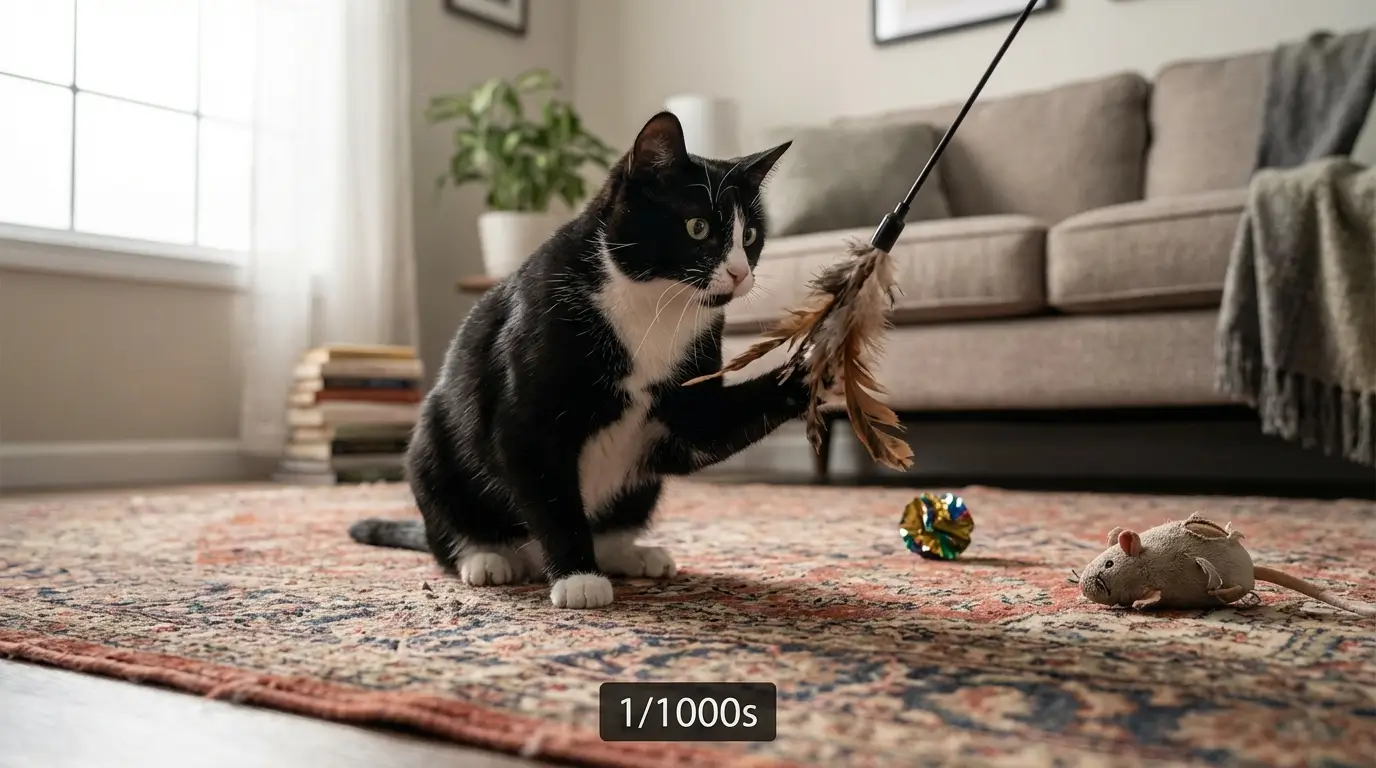
- Wand toys: A rod with a string and lure (feathers, fabric, or a small toy) at the end. You control the movement, which keeps things interesting.
- Chase toys: Small balls, crinkle balls and lightweight mice that can be batted and chased. Many cats like ones that roll unpredictably.
- Interactive puzzle feeders: Toys that make your cat work for dry food or treats, like balls with holes or simple home-made puzzles.
- Kick toys: Long, soft toys your cat can grab with their front paws and bunny-kick with the back legs.
Most cats prefer short, intense bursts of play. Aim toys along the floor, not in their face. Think “mouse running along a hedge”, not “seagull dive-bombing”. Let your cat catch the toy regularly so they don’t get frustrated.
Remember that preferences vary. Some cats are mad for feathers; others love rustling paper or tiny soft balls they can carry and stash. Rotating different types of cat toys will help you figure out what your cat truly enjoys day to day.
Safe cat toys vs ones to supervise or skip
Most commercial toys are fairly safe, but cats are surprisingly good at chewing things off and swallowing them. A 2021 review of feline foreign body cases found linear objects like string and ribbon were a common and serious problem.[2] So safety is not just a box-ticking exercise; it is about avoiding real emergencies.
Generally safe cat toys (for solo play):
- Solid rubber or plastic balls large enough not to be swallowed
- Soft mice with stitched (not glued) features and no loose parts
- Kick toys with strong stitching and no long strings
- Sturdy puzzle feeders and treat balls
Toys that should always be supervised:
- Wand toys with strings or wires – brilliant for play, but put away afterwards
- Anything with ribbons, elastic, yarn or shoelaces
- Feather toys – great fun, but bits can come off and be swallowed
Toys and items to avoid completely:
- Loose thread, sewing string, hair bobbles and tinsel
- Plastic bags or crisp packets (suffocation risk and sharp edges)
- Very small balls or bells that could lodge in the throat
Check toys weekly. If stuffing is coming out, pieces are missing or the toy is shedding plastic, retire it. When in doubt, ask your vet – especially if your cat is a known chewer. For more on keeping your cat safe at home, see our piece on household hazards: PetPal.ie.
How many toys should a cat have – and how to rotate them
You do not need a toy shop’s worth of clutter in your living room. What matters is variety plus rotation. Most behaviourists recommend having several different types of cat toys and keeping only a few out at a time.[3]
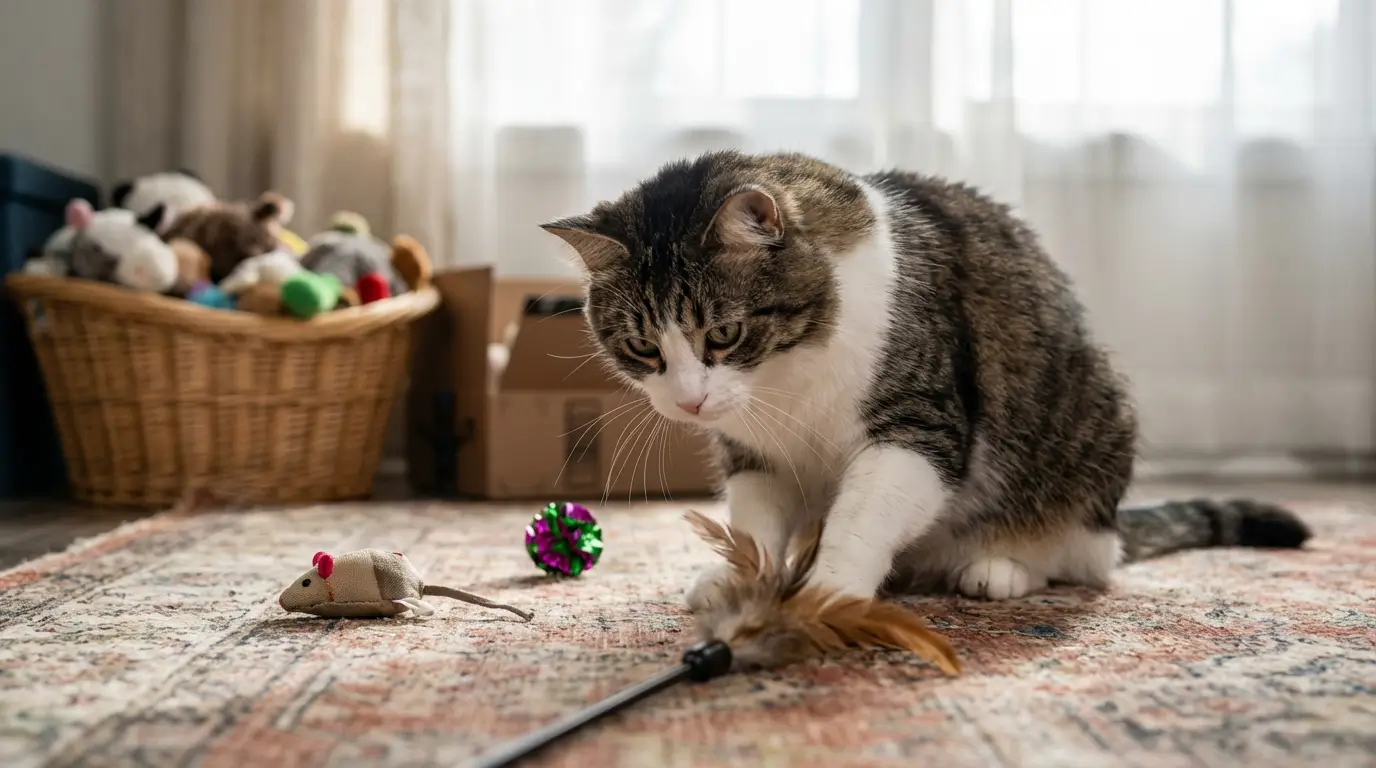
A simple starting point for one adult indoor cat:
- 2–3 chase toys (balls or mice)
- 1–2 kick toys
- 1 puzzle feeder or treat ball
- 1–2 wand toys used under supervision
Keep a small stash in a cupboard. Every few days, swap a couple of toys out for different ones. This “rotate cat toys” approach makes old toys feel new again and prevents what I call “toy blindness”, where the cat just tunes everything out.
For multi-cat homes, you will want more to reduce squabbles, and a mix of solo toys and shared interactive cat toys. If your cat is older or has arthritis, go for softer, lighter toys and slower, gentler movement. Kittens, on the other hand, often need several play sessions a day and will burn through toys faster, so budget for replacing worn items.
DIY cat toys using things you already own
Homemade cat toys can be just as engaging as shop-bought ones – sometimes more so, because they smell like “home” and move unpredictably. Just keep safety in mind and supervise at first.
Simple DIY cat toys ideas:
- Toilet roll treat puzzle: Fold one end of a cardboard tube, drop in a few kibbles, then fold the other end. Your cat bats it around to release the food.
- Paper scrunch balls: Scrunch plain paper into a ball (no staples, tape or string). Light, noisy and great for batting.
- Egg box feeder: Scatter dry food in a cardboard egg box and close the lid. Cut a few holes so your cat has to fish the food out.
- Sock kicker: Stuff an old sock with fabric offcuts, then knot the end. For extra interest, add a pinch of dried catnip if your cat reacts to it.
If you want to go more eco friendly, re-use cardboard, paper and old fabric rather than buying more plastic. Avoid string, elastic bands and anything they could chew into long strips. After a play session, tidy DIY toys away, especially if your cat is a keen chewer or likes to rip cardboard into small pieces.
For more enrichment ideas beyond toys, have a look at our article on indoor cat happiness and stress reduction at PetPal.ie.
Using cat toys to tackle boredom, weight and behaviour issues
Many indoor cats are a bit overweight and a bit bored, even in loving homes. Studies suggest that around 40–50% of pet cats in developed countries are overweight or obese.[4] Toys are one of the easiest tools we have to help with this, alongside diet.
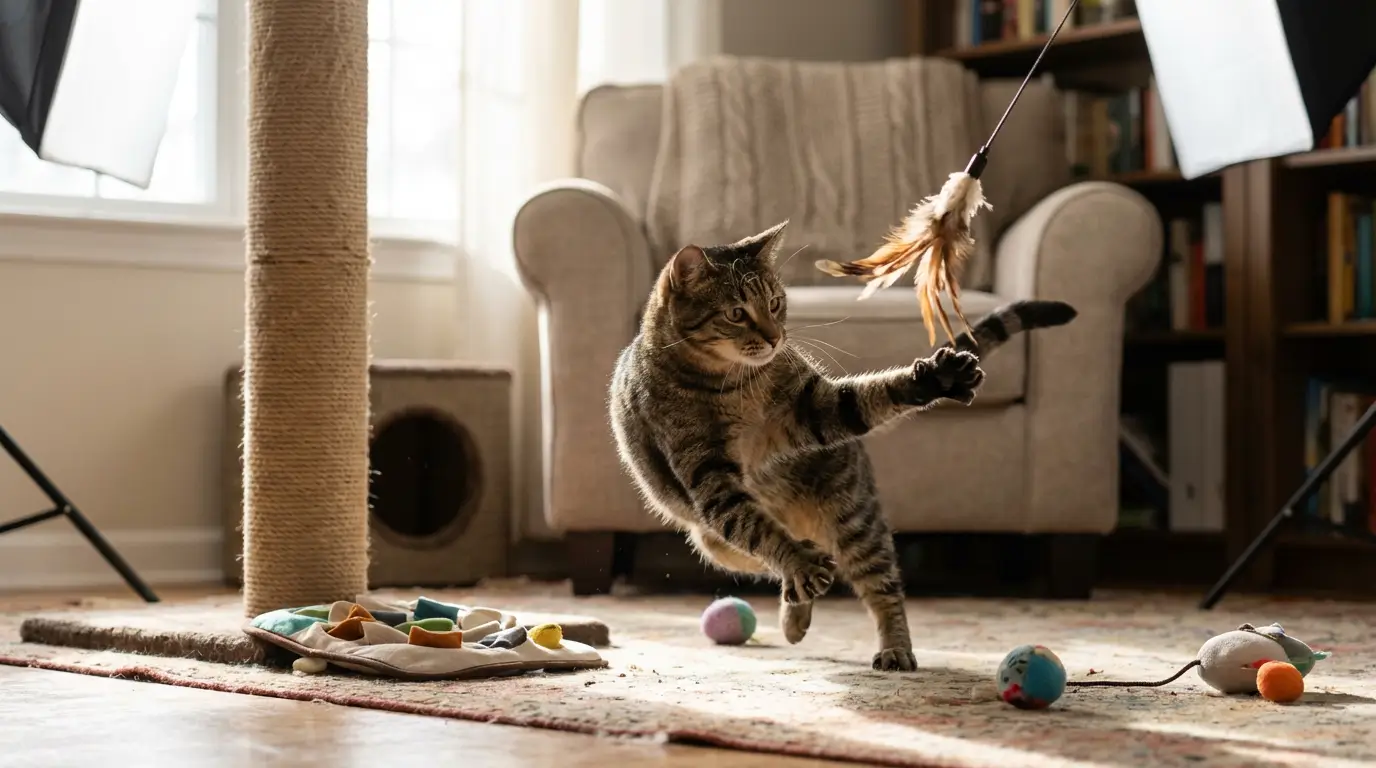
For boredom and stress: Daily play gives your cat an outlet for natural hunting behaviour and nervous energy. This can reduce:
- Random 3 a.m. zoomies and yowling
- Pouncing on ankles or children
- Overgrooming triggered by frustration
For weight management: Swap free-feeding from a bowl for puzzle feeders and treat balls. Your cat has to move and think to get food, which increases calories burned and slows eating. The American Association of Feline Practitioners highlights food puzzles as a useful tool in feline weight management plans.[1]
For behaviour issues: For many “naughty” behaviours, the cat is simply under-stimulated. Try adding two 5–10 minute play sessions a day with interactive cat toys like wands or chase balls. Finish each session with a small snack to complete that hunt–eat–groom–sleep pattern. If problems persist or your cat seems anxious, speak with your vet, as pain or medical conditions can also drive behaviour changes.
Turning playtime into a daily routine
Cat toys only work if they are used – and indoor cats rely on us to kick things off. The good news is it does not have to be a huge time commitment.
A realistic routine for a busy household might look like:
- Morning: 5 minutes with a wand toy before breakfast.
- Evening: 10 minutes of chase games with balls or mice before your own dinner.
- Anytime: Dry food always served via a puzzle feeder, not a plain bowl.
Vary how you move the toy: slow and sneaky along the skirting board, a quick dart out from under a towel, a sudden stillness, then a sprint. Let your cat “win” often. If they walk off mid-play, do not chase them with the toy; give them a break and try later.
Over a couple of weeks, you should see a difference in your cat’s confidence, muscle tone and general calmness around the house. If your cat is older or has health issues, ask your vet for tailored advice before ramping up activity levels.
Bottom line: fewer, better toys – and more play
Most cats do not need more cat toys; they need the right mix of toys, used in the right way. Choose safe cat toys that move like prey, limit strings and tiny parts to supervised sessions, and rotate what is on offer so nothing becomes wallpaper.
Homemade cat toys can absolutely earn their place alongside shop-bought ones, especially when you build in food puzzles and eco friendly materials. A couple of short play sessions a day can help with boredom, weight control and many everyday behaviour headaches for indoor cats.
Pick two toys from your current stash, put the rest away, and commit to 10 minutes of focused play today. Your cat does not care how fancy the toy is – they care that you are moving it like something worth hunting.
“Play is not an extra for indoor cats – it is a core part of their physical and emotional health.”
References
- [1] American Association of Feline Practitioners. Feline enrichment and behaviour guidelines.
- [2] World Small Animal Veterinary Association. Gastrointestinal foreign bodies in cats – clinical overview.
- [3] International Cat Care. Environmental enrichment for indoor cats.
- [4] Association for Pet Obesity Prevention. Pet obesity prevalence survey.

5 Common Dog Health Problems

10 Best Irish Pet Rescues 2024
Indoor Cat Risks in Irish Homes