

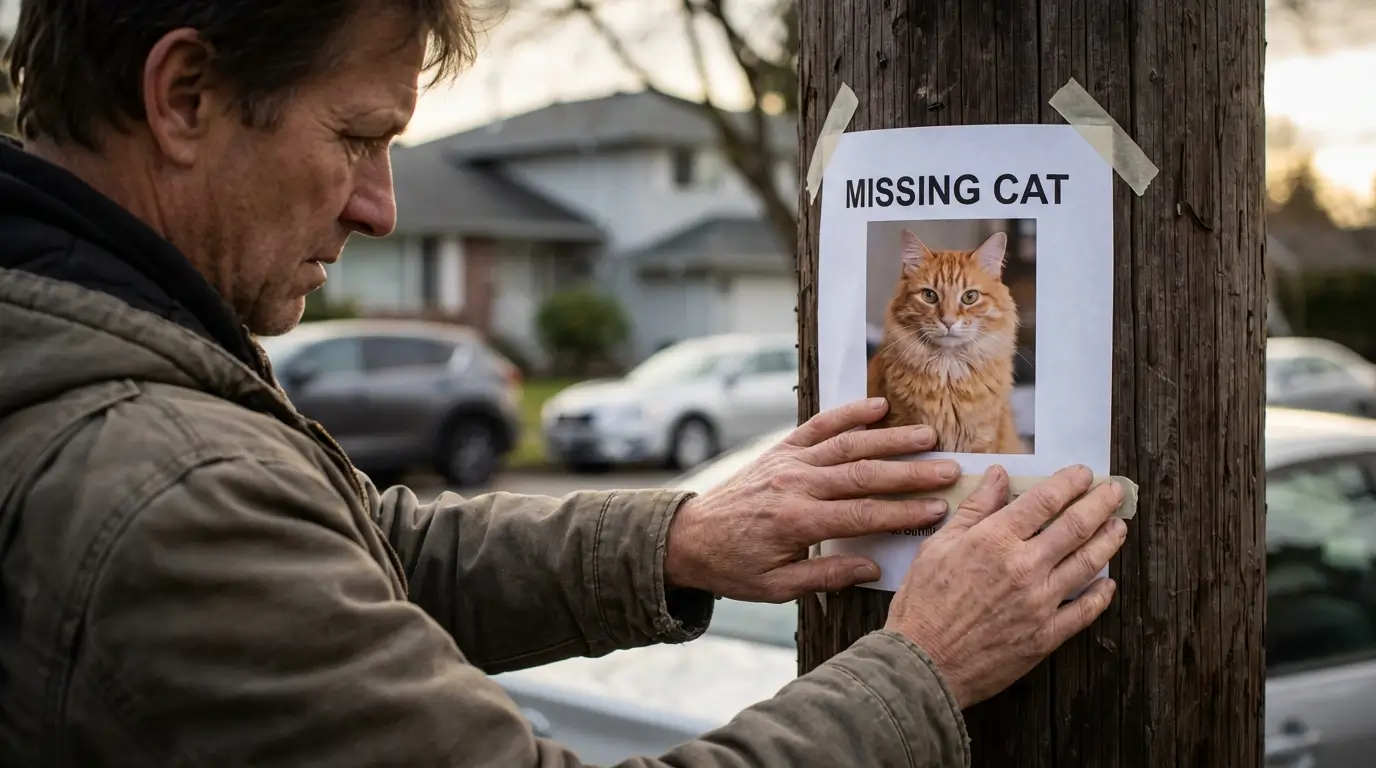
If your cat has vanished and your stomach is in knots, you need a clear checklist more than you need reassurance. Here’s exactly what to do if your cat goes missing in the first 24 hours, step by step.
Stay calm and gather the key details
The first 10 minutes matter, but running around in a panic wastes them. Take a breath and grab a notebook or your phone. You’re about to repeat the same facts to neighbours, vets and online groups, so get them straight now.
Write down:
- Your cat’s name and how you usually call them (nicknames, whistle, treat bag sounds)
- Recent photo (side-on if possible, and one showing face clearly)
- Age, sex, neutered/spayed status and whether microchipped
- Collar description (type, colour, ID tag details, bell, GPS tracker)
- Any medical issues or meds they’re on
- Exact time and place last seen (indoors, garden, street, window, balcony)
Also note your cat’s personality: shy, bold, food-obsessed, hates rain, door-dasher, strictly indoor. This will shape how you search. For example, research suggests most indoor-only cats hide within 3–5 houses of where they escaped because they’re frightened by the outdoors [1]. Quiet, methodical searching works better than shouting their name.
Finally, put food, water and a favourite blanket or bed in one safe, sheltered spot by the house. This gives your cat a familiar “home base” if they’re hovering nearby.
Search your home and immediate area properly
Before you assume they’re gone, do a slow, systematic search indoors. Cats are experts at wedging themselves into ridiculous spaces, especially when stressed or unwell. Vets regularly see “missing” cats who’ve been in the airing cupboard for 12 hours.
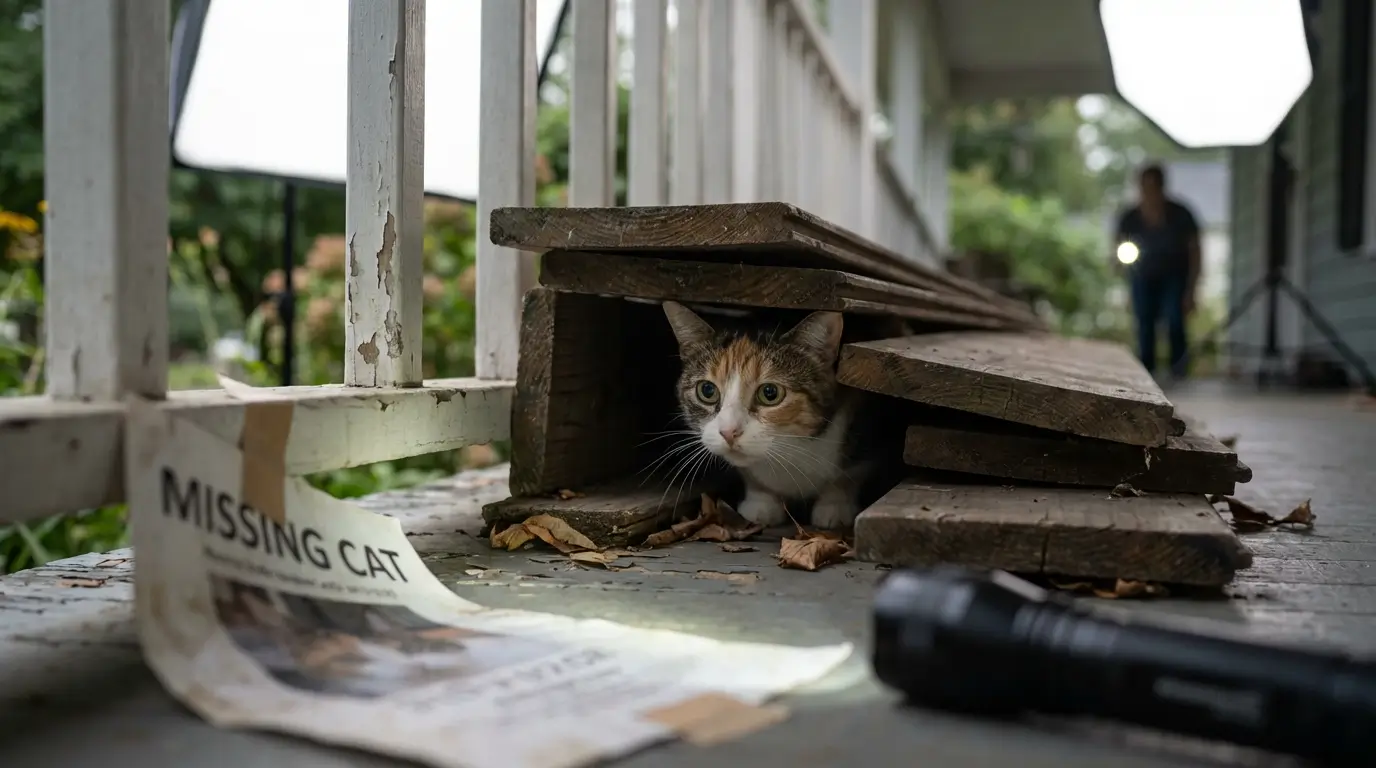
Check, using a torch even in daylight:
- Wardrobes, drawers, under beds and behind furniture
- Hotspots: boiler cupboard, under the bath, behind the fridge, washing machine and tumble dryer (inside and behind)
- Attic, sheds, garages and any outbuildings
- Inside sofas, recliners and mattresses if they have gaps
Call softly while you look, and pause to listen. A trapped cat may only give the tiniest meow. Shake the treat tin or kibble box—most cats respond even when scared.
If your cat definitely got outside, start with your own garden and walls, then move to the neighbour’s on each side. For a lost indoor cat, search in a 15–50 metre radius to begin with. They’re likely hiding under decking, cars, hedges, shrubs, or squeezed into a tight ledge. Crouch down so you’re at their level and look under, not just around.
Use timing, weather and personality to your advantage
When planning how to find a lost cat, think like a cat, not a human. Time of day, weather and your cat’s temperament all change where they’re likely to be.
Most cats, especially nervous ones, move more at dusk, night and dawn when it’s quieter. A study on lost cats found that many were found within 500 metres of home, often spotted at night when traffic and noise were low [1]. That’s why evening torch searches are so effective.
Use these rules of thumb:
- Shy or indoor-only cats: more likely to freeze and hide. Search very close to home, quietly, after dark. Don’t call loudly or chase.
- Confident outdoor cats: may be exploring a wider area or stuck in a shed or garage. Focus on houses backing onto gardens or fields.
- Poor weather: heavy rain, wind or cold usually pushes cats to cover—under cars, porches, bushes or into open sheds.
- Hot weather: look for shade and cool surfaces—under hedges, decks, cars and dense shrubs.
Repeat the same route several times. A cat who was hiding may have moved by the second or third pass. Take a torch, walk slowly and listen for rustling. If you can, have one person stay at home base in case the cat sneaks back while you’re out.
Neighbours, vets and microchip: who to tell and when
Within the first few hours, move from searching alone to enlisting help. This is where a simple checklist stops things falling through the cracks.

Talk to neighbours and check sheds
For a “cat missing what to do first” priority list, neighbours are near the top. Within 2–4 hours of realising your cat is gone:
- Knock on immediate neighbours’ doors (both sides, opposite, and backing onto your garden).
- Politely ask them to check garages, sheds, greenhouses and under decking while you wait at the door—don’t rely on “I’ll look later”.
- Leave a small flyer with your number and your cat’s photo.
Contact vets, shelters and microchip database
By the 6–12 hour mark (sooner if your cat has health problems):
- Ring all local vets and emergency clinics within a reasonable driving distance.
- Call local rescues and the council pound or animal control team (varies by county in Ireland and the UK).
- Tell them your cat is microchipped, give the chip number if you have it, and check your contact details are current.
Also log into your microchip database (your vet can tell you which one you’re with) and mark your cat as missing. That way, if a “microchipped cat still missing” is scanned anywhere, you’ll be called straight away. In Ireland and the UK, microchipping is one of the most effective ways to get a lost cat home safely [2].
Posters, social media and online search tools
Once you’ve done a thorough local search, widen the net. Knowing how to use social media for a lost cat and what to put on posters can double your chances of a sighting.
Missing cat poster ideas
Keep your design simple and bold. You want someone walking past to get the message in three seconds. Include:
- BIG title: “MISSING CAT – REWARD” or “LOST CAT”
- Clear colour photo, ideally A4 size, printed in colour
- Short description: colour, coat length, any unique markings
- Where and when last seen (road name, area)
- Note if shy or friendly (e.g. “Very nervous, please don’t chase”)
- Two phone numbers (in case one has no signal)
Put posters at eye level on lamp posts, bus stops, local shop noticeboards and the vet’s waiting room. Refresh them if it rains.
What to post online
For social media and local lost-and-found groups, include:
- Same core info as the poster, plus microchip/collar note
- Pin your location roughly (e.g. “Rathmines, Dublin 6, near XYZ Road”)
- Ask for photo or video if someone thinks they’ve seen your cat
- Update the original post with any confirmed sightings rather than making new ones
Check community pages several times a day. Many areas now have dedicated lost pet pages; post there, but also on general local groups. You can also keep a simple search log—time, place, who you called—to stop duplication.
Food, litter boxes and scent tricks: what actually helps?
There’s a lot of debate about whether you should put your cat’s litter tray outside. Some behaviourists now advise against it, as it can potentially attract other cats and foxes, which might scare your own cat off further [3].
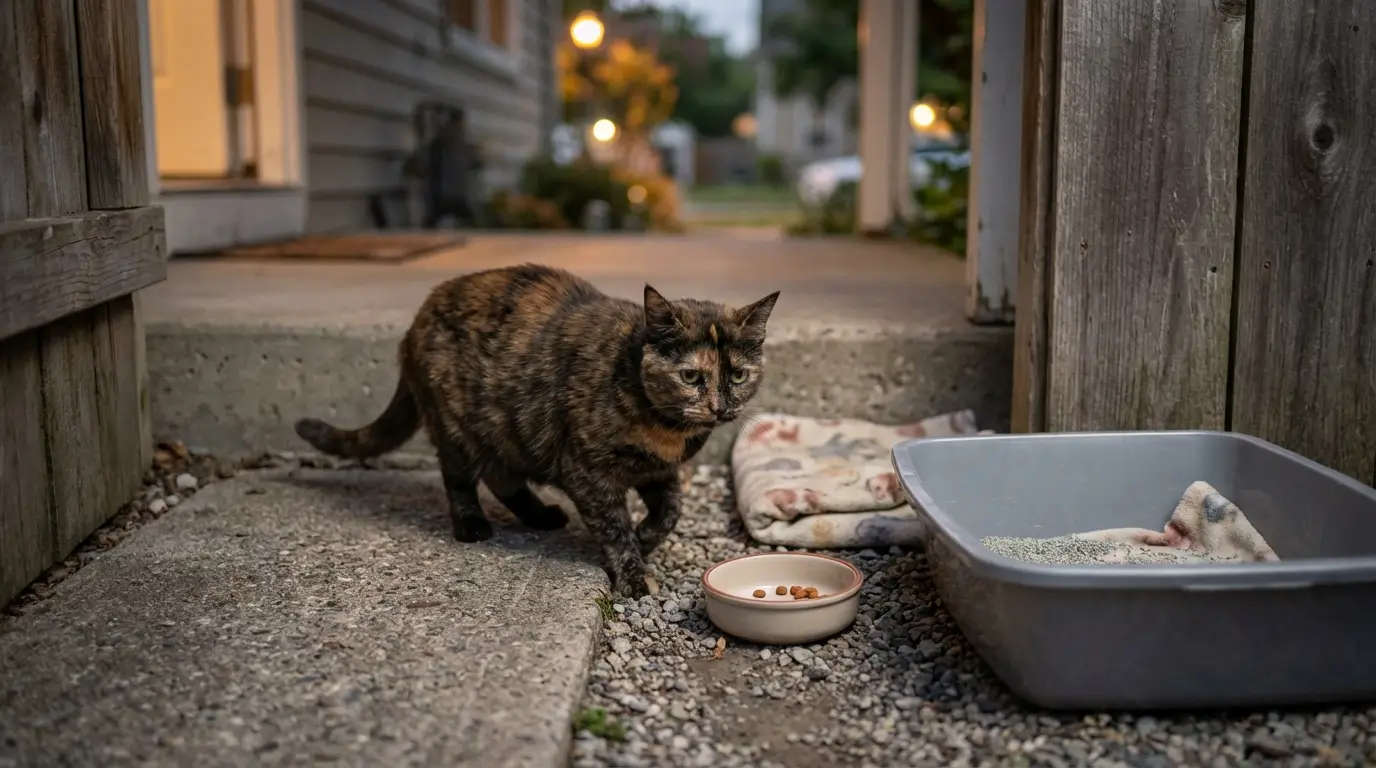
Instead, focus on a few low-risk scent strategies:
- Place a strong-smelling wet food or warmed chicken near the door or window they use most.
- Put their favourite bedding or a worn T-shirt of yours in a dry, sheltered spot by the house.
- Set up a baby monitor, Wi-Fi camera or quietly watch from indoors during the quieter night hours.
If you do decide to try the litter tray outside, keep it very close to the house and only for a short period. Do not scatter litter around the garden; it’s unlikely to help and isn’t great for hygiene.
Avoid leaving out large amounts of food overnight. You’ll mostly feed neighbourhood cats and wildlife. Offer a decent meal at set times, then remove leftovers after an hour so your own cat has a clear reason to return at those times.
How long do cats go missing for – and when to worry?
How long cats usually stay missing varies a lot with lifestyle:
- Indoor-only cats: if missing more than a few hours, treat as urgent—they’re out of their depth.
- Outdoor cats with regular routines: start to worry if they miss a main mealtime by several hours, or don’t come home overnight when they normally would.
- Roaming farm or country cats: they may do longer circuits, but a full day or night out of character is still a red flag.
One study found that about 75% of lost cats reported by owners were found within 500 metres of home, many within a few days [1]. So don’t assume the worst on day one. That said, contact vets and shelters immediately if:
- Your cat has a medical condition (diabetes, kidney disease, heart issues)
- They’re very young, elderly, pregnant or recently post-surgery
- You live near busy roads, fast rivers, building sites or known fox habitats
If your microchipped cat is still missing after several days, ring the microchip company again to double-check your details and ask vets and rescues to re-scan any unidentified cats in their care.
Coping emotionally and talking to children
When a cat is missing, it’s not “just a pet” gone. It’s a family member. The uncertainty is brutal. You may find yourself checking the door a dozen times an hour. That’s normal.
To cope day to day:
- Set specific times for searching, phoning and posting updates, then take breaks.
- Ask a trusted friend to manage online updates if you’re overwhelmed.
- Keep eating and sleeping as regularly as you can; you search better when you’re not exhausted.
With children, be honest but gentle:
- Explain that cats are clever and often hide close to home, and that you’re doing everything possible to bring them back.
- Let children help in small ways—drawing posters, choosing photos, checking the food bowl.
- Reassure them that feeling sad, worried or angry is okay.
If you need help preparing for your cat’s return behaviour-wise (some come back frightened or clingy), our cat anxiety and stress guide can help you plan ahead. It’s also worth reading about indoor cat enrichment if you decide to keep them inside after this scare.
Once they’re home: preventing another escape
When your cat finally strolls back in as if nothing happened, relief can turn to frustration. Use that energy to tighten up safety. Prevention is kinder than going through this again.
Think through:
- Microchipping and ID: make sure the chip is registered with up-to-date details and consider a quick-release safety collar with an ID tag.
- Doors and windows: add screens, use child locks or create rules about who can open certain doors, especially with kids.
- Garden safety: consider cat-proofing fencing or using a secure catio so they get fresh air without full street access.
- Routine and enrichment: bored cats are more likely to wander. Daily play sessions, climbing options and puzzle feeders make home more interesting.
Finally, keep your “what to do if your cat goes missing” checklist somewhere handy—on the fridge or in your phone. You may never need it again, but if you do, you’ll lose less time to panic and more to what really counts: getting your cat safely home.
References: [1] Humane Society & lost cat search behaviour summaries; [2] UK & Irish microchipping guidance for cats, British Veterinary Association; [3] International Cat Care advice on lost cats and scent use.

5 Common Dog Health Problems

10 Best Irish Pet Rescues 2024
Indoor Cat Risks in Irish Homes