


If your cat’s breath knocks you back or they’ve suddenly gone fussy with food, there’s a fair chance their mouth is the problem – and you can turn it around with a few simple habits.
Why cat dental health matters more than you think
Most indoor cats look perfectly healthy from the outside, but around 70% have some form of dental disease by the age of three, according to veterinary studies [1]. It creeps in quietly: a bit of redness on the gums, mild tartar, the odd whiff of bad breath. Left alone, it can end in painful tooth loss, infection and even heart or kidney issues as bacteria spread through the bloodstream [2].
The problem is, cats are brilliant at hiding discomfort. Many will continue to eat, groom and play while living with very sore mouths. So cat dental health is really about spotting subtle changes, putting a solid at‑home routine in place, and knowing when it’s time for your vet to step in.
In this article we’ll walk through what a healthy cat mouth should look like, the early signs of trouble, how to manage cat dental care at home (including how often to brush cat’s teeth), which diets and treats genuinely help, and when dental surgery is on the cards.
What a healthy cat mouth actually looks like
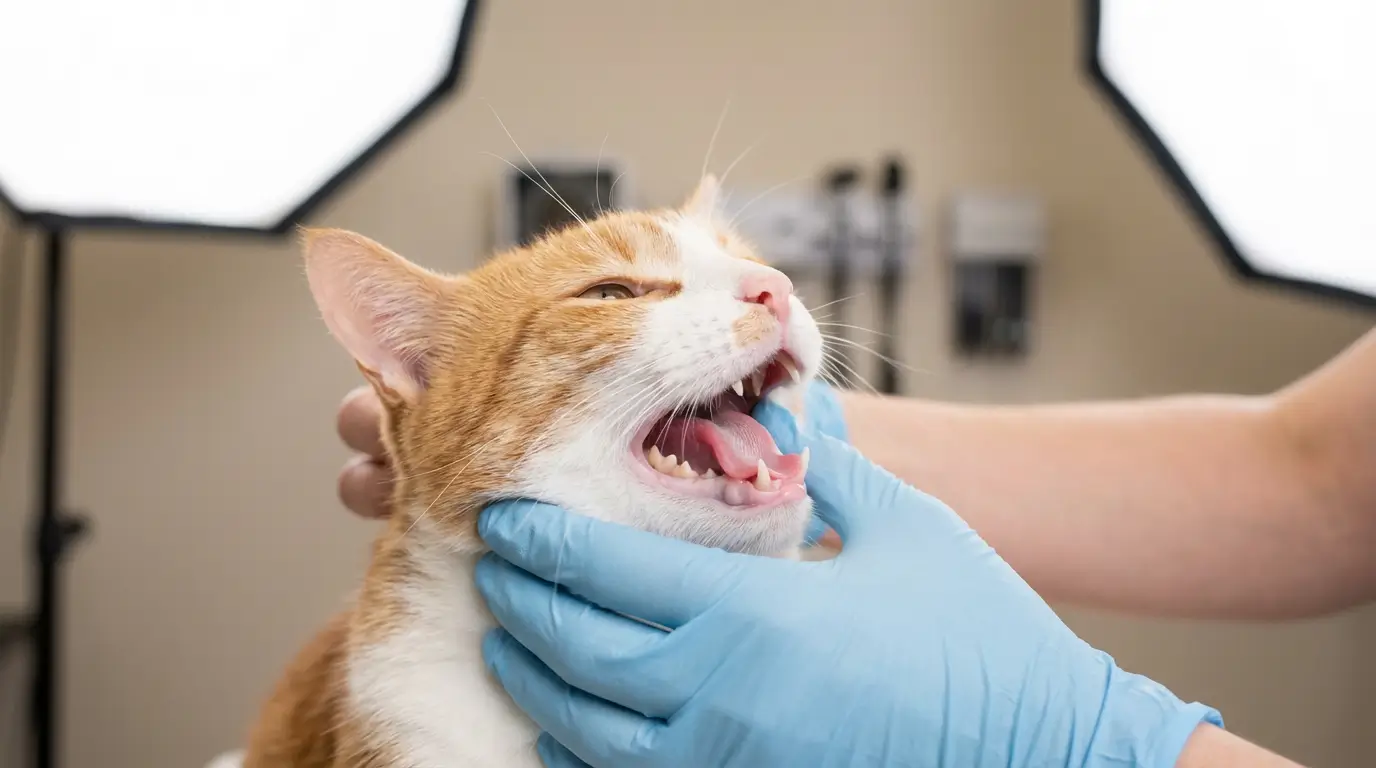
Before you can spot problems, it helps to know what “normal” looks like. A healthy cat mouth should show:
- Pink (but not angry red) gums with a smooth edge where gum meets tooth
- Teeth that are white to off‑white, without thick yellow or brown crusts
- No obvious chips, fractures or holes in the teeth
- Breath that’s mild – it may smell “catty”, but shouldn’t be foul or rotten
Gently lift your cat’s lip at the side rather than prying the jaw open. Focus on the upper back teeth – that’s where tartar and gum disease usually start. A very thin yellow line near the gum can be normal in older cats, but anything thick, rough or dark brown is tartar, not just staining.
Healthy cats also eat, groom and play normally. They crunch biscuits without dropping them, don’t paw at their faces, and don’t shy away if you touch around their muzzle. A change in behaviour – especially in a usually food‑motivated cat – is often your first real clue something in the mouth hurts.
Early signs of dental disease in cats you can spot
Gum disease (gingivitis and periodontitis) and resorptive lesions (a painful condition where the tooth breaks down from the inside) are very common in cats [1]. Here are the cat dental problems symptoms you’re most likely to notice at home:
- Bad breath – a persistent, rotten or metallic smell is not normal. Bad breath in cats causes can include tartar, gum infection, decaying teeth and sometimes kidney disease or diabetes.
- Red or swollen gums – especially a bright red line along the gum edge, or gums that bleed when you touch or your cat chews.
- Tartar build‑up – yellow to brown crust on the side of teeth, generally worst on the upper back molars.
- Drooling – clear or blood‑tinged saliva, often with your cat licking their lips a lot.
- Changes in eating – chewing on one side, dropping food, suddenly refusing biscuits, or begging but then walking away from the bowl.
- Pawing at the mouth or face rubbing more than usual.
- Weight loss, matted coat or hiding – signs your cat is sore and not grooming or eating properly.
Any of these are your sign to book a vet check. Don’t wait until you see loose teeth, pus or your cat crying out – by that stage, disease is usually advanced and dental surgery is more likely to be needed.
For a fuller list of subtle behaviour changes to watch for, see our piece on common cat behaviour problems and how pain can play a role.
How and how often to brush your cat’s teeth
The most effective cat dental care at home is still simple tooth brushing. Studies show daily brushing significantly reduces plaque and tartar in cats [1]. The challenge is making it something your cat will tolerate.
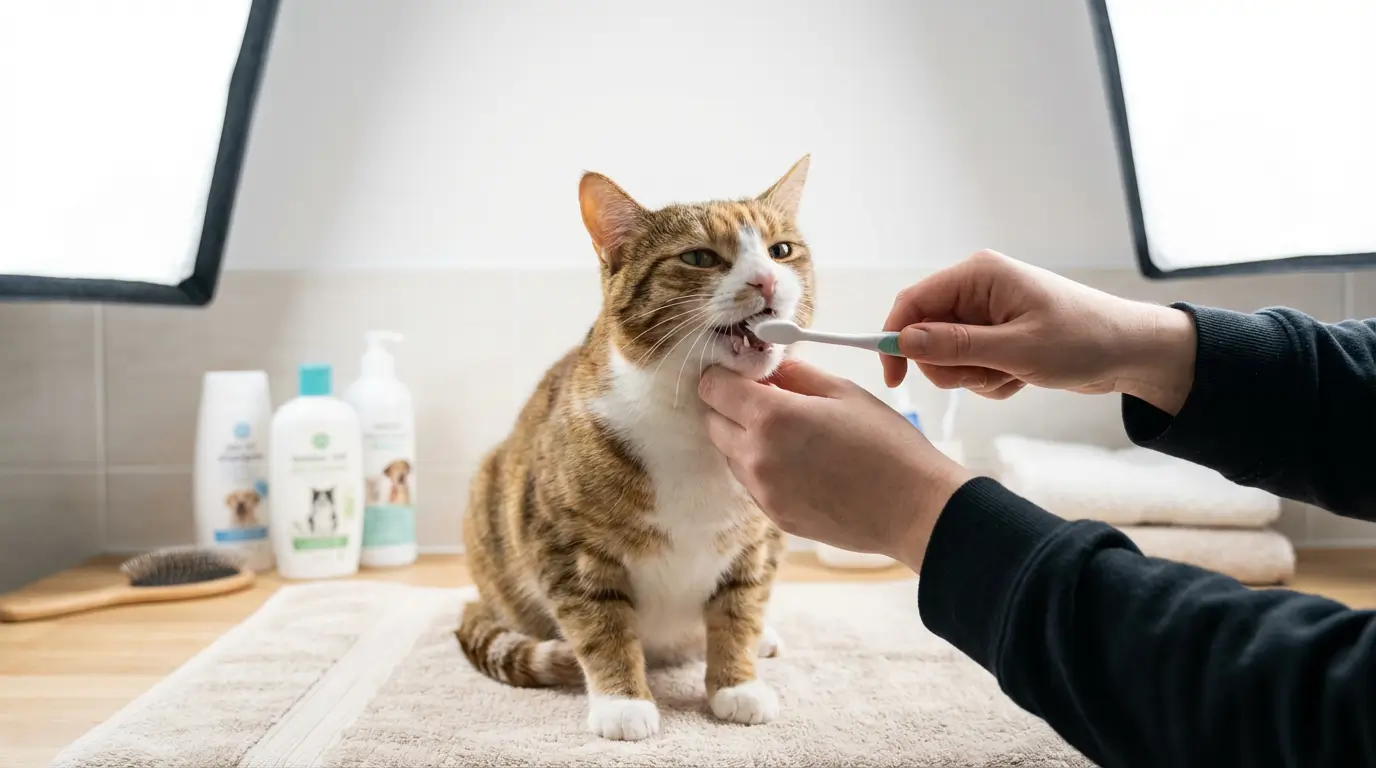
How often? Aim for daily brushing if you can. Realistically, a proper brush 3–4 times a week still makes a big difference. Less than that and the benefits drop off quickly because plaque hardens into tartar within a few days.
What to use:
- A cat toothbrush or soft finger brush (never a hard human brush)
- Cat‑specific toothpaste – never human paste; the fluoride levels and foaming agents are unsafe if swallowed
Step‑by‑step routine (10 minutes a day to start):
- Get them used to mouth handling: once a day, gently stroke around the muzzle, then lift the lip for a second, treat, and stop.
- Add toothpaste taste: pop a tiny smear on your finger, let your cat lick it, then reward.
- Finger brushing: use your finger or finger brush to rub along the outer surfaces of the teeth in small circles. Focus on the canine teeth and back molars.
- Introduce the toothbrush: short sessions (10–15 seconds per side) at first, gradually building up.
Only ever brush the outside surfaces of the teeth – that’s where plaque collects. Don’t fight with your cat; if they’re stressed or aggressive, speak to your vet about alternatives such as prescription dental diets or gels. We have more low‑stress handling tips in our article on reducing vet visit anxiety in cats, which also apply to home care.
Diet, treats and routines that actually help (and common myths)
Food and routine can help with preventing tartar in cats, but there’s a lot of marketing noise. Here’s what’s backed by evidence and what’s more wishful thinking.
What helps cat dental health
- Veterinary dental diets: Some specially formulated dry foods have larger, fibrous biscuits that don’t shatter straight away, so they mechanically scrub the tooth surface as the cat bites. Many are approved by the Veterinary Oral Health Council (VOHC) based on testing [3].
- VOHC‑accepted dental treats and chews: These are designed to slow plaque and tartar build‑up. They’re a useful addition but don’t replace brushing.
- Water additives and gels: A few products have evidence for reducing plaque when used regularly, especially in cats that won’t tolerate brushing. Look for VOHC acceptance where possible.
- Routine vet checks: An annual dental exam (more often in senior cats) means problems are caught early, before they’re catastrophic.
Common myths and what doesn’t do much
- “Dry food alone cleans teeth” – myth. Ordinary kibble tends to shatter on the tip of the tooth, so it rarely cleans effectively. Some dry foods are better than pure soft diets for teeth, but they don’t magically scrub them.
- “Bones clean cat teeth” – risky myth. Raw or cooked bones can break teeth, cause obstructions or serious infections. Most vets strongly advise against them.
- “A bit of fish or yoghurt will freshen breath” – myth. Breath fresheners don’t treat the underlying disease. If the smell is bad, your cat needs a mouth check, not a mint.
The best diet for cat dental health is usually a combination: a nutritionally complete main food (wet, dry or mixed) tailored to your cat’s age and health, plus either a prescription dental diet or VOHC‑approved chews and water additives, all on top of brushing where possible. Your vet can help you match options to your cat’s medical needs, weight and lifestyle.
When your cat needs a vet dental check, cleaning or surgery
So when do cats need dental surgery or at least a professional clean? A good rule of thumb: if you can see tartar, redness or damaged teeth, it’s already time for a vet visit.
Book a dental check promptly if you notice:
- Bad breath, drooling or blood in the saliva
- Red, swollen or bleeding gums
- Brown/yellow tartar build‑up
- Loose, chipped or missing teeth
- Changes in eating, chewing or grooming
- Swelling around the jaw or face
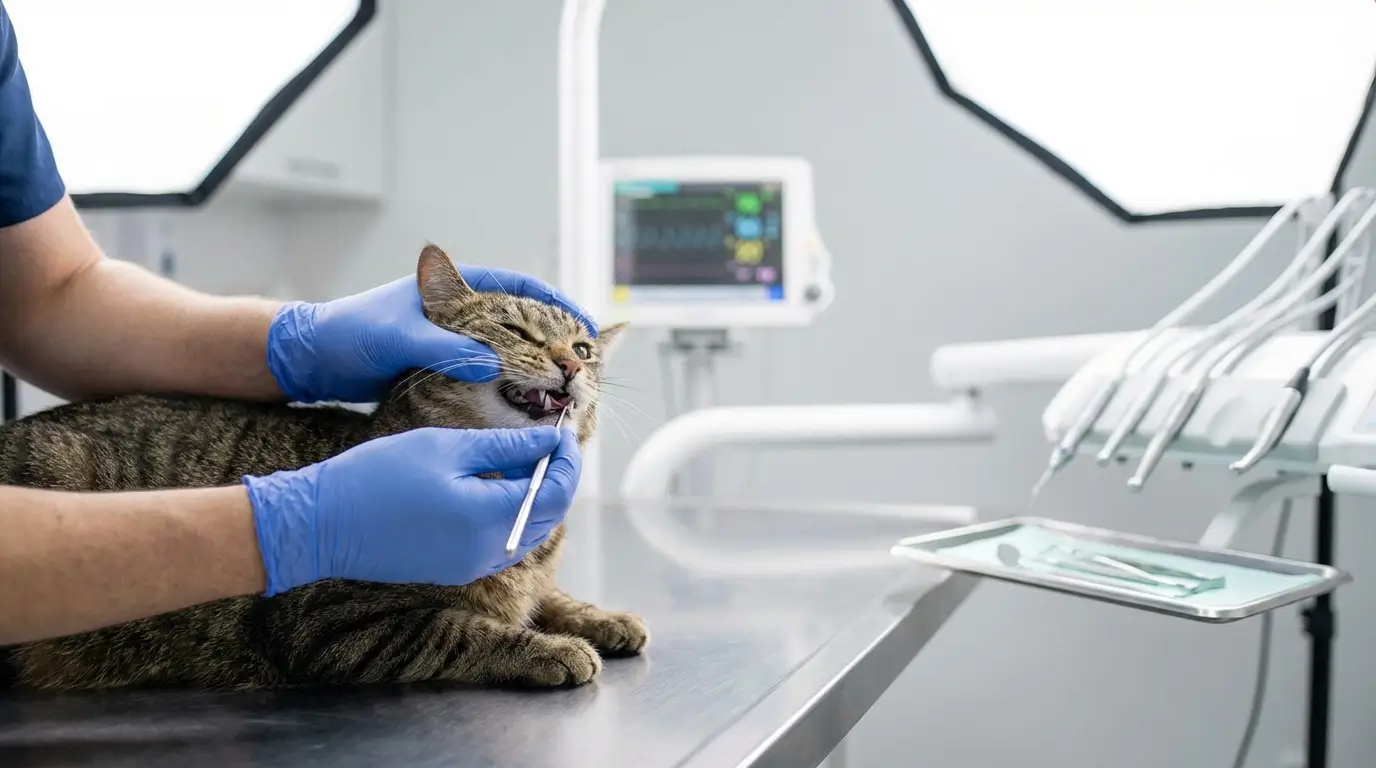
During a dental consultation, your vet will examine the mouth as much as your cat allows awake. Many problems – especially resorptive lesions and root infections – only show up properly under general anaesthetic with dental X‑rays. If needed, your vet may recommend:
- Professional cat teeth cleaning: scaling above and below the gumline, plus polishing to slow plaque build‑up.
- Extractions (dental surgery): removing diseased or painful teeth. This sounds drastic, but most cats eat better and are more comfortable afterwards.
- Pain relief and antibiotics where there’s infection or severe inflammation.
Healthy adult cats should have a dental check at least once a year. Senior cat dental care often means 6‑monthly checks, as older cats are more prone to gum disease, resorptive lesions and other illnesses that affect the mouth. Cats with known dental issues or conditions like feline calicivirus or FIV may need even closer monitoring.
Practical daily routine for better cat dental health
If you’re busy (and who isn’t), the idea of brushing your cat’s teeth every day might feel unrealistic. The trick is to build a simple routine you can actually stick to.
A realistic weekly plan might look like:
- Daily (30–60 seconds): quick brush of the outer surfaces of the canine and back teeth, followed by a small treat or play session.
- Twice weekly: check gums and teeth for redness, chips or tartar under good light.
- Several times a week: offer an approved dental treat or feed a portion of a dental diet (if recommended by your vet).
- Yearly: schedule a vet health check with a specific dental exam; more often for senior cats or those with past issues.
Keep sessions short and positive. Pair brushing with something your cat already likes – for example, brush then serve dinner, or brush then start a favourite game. If your cat becomes agitated, stop and try again another day rather than turning it into a wrestling match.
Most importantly, don’t feel guilty if your brushing isn’t perfect. Anything is better than nothing. Consistency over months and years matters far more than a handful of heroic “good” weeks.
Bringing it all together
Cat dental health isn’t about having Instagram‑worthy white teeth. It’s about keeping your cat pain‑free, eating well and enjoying life into their senior years. Healthy gums are pink and calm, teeth are fairly clean, and breath is respectable. Early warning signs – bad breath, red gums, tartar, changes in chewing – are your cue to act, not something to ignore.
If you can manage tooth brushing a few times a week, choose proven diets or chews, and get regular vet dental checks, you’re already ahead of the curve. And if you’ve spotted any of the signs we’ve talked about today, ring your vet and get that mouth looked at. Future‑you – and your cat – will be very glad you did.
“Around 70% of cats have some form of dental disease by age three” [1]
References
- [1] American Veterinary Dental College – Periodontal disease in pets: avdc.org
- [2] American Animal Hospital Association – Dental care guidelines: aaha.org
- [3] Veterinary Oral Health Council – Accepted products list: vohc.org

5 Common Dog Health Problems

10 Best Irish Pet Rescues 2024

Indoor Cat Risks in Irish Homes