

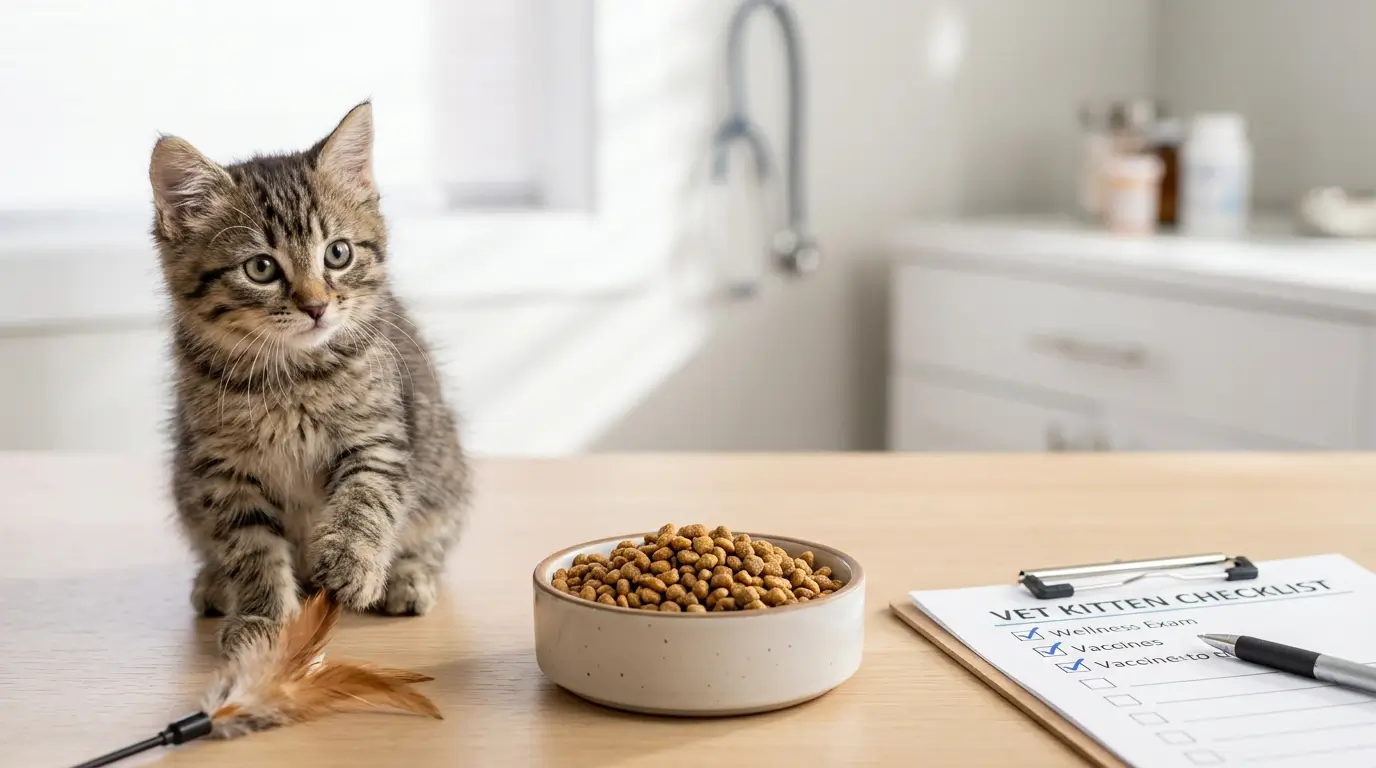
If your kitten is inhaling their kibble and still screaming for more, you’re not alone – choosing the best dry cat food for kittens is one of the biggest early headaches for new cat owners. The good news: with a simple checklist, you can pick a food that actually suits your kitten’s body, not just a fancy label.
Is dry food good for kittens, or should you avoid it?
Short answer: yes, kitten dry food can be safe and healthy for young kittens, as long as it’s a complete, balanced formula designed specifically for growth. The FEDIAF (the European pet food authority) and AAFCO both publish nutrient profiles for kitten growth, and reputable brands formulate to meet these standards.[1][2]
Where people get into trouble is using the wrong type of food (adult or “all life stages”) or relying on dry food alone for very young kittens who aren’t drinking much water. Kittens have tiny bodies and fast metabolisms; they dehydrate and lose weight far more quickly than adult cats.[3] That’s why texture, water intake and digestibility all matter as much as the ingredient list.
In my experience, dry is usually fine from about 7–8 weeks if:
- The biscuits are small enough or can be soaked in warm water
- The bag clearly says it is formulated for growth / kittens
- Your kitten has fresh water available at all times (and actually drinks it)
- You pair it with some wet food, especially in the early months
If your kitten is under 7 weeks, underweight, recovering from illness, or prone to kitten digestion and diarrhoea, speak to your vet before relying heavily on dry food.
What makes the best dry cat food for kittens?
Here’s the thing: the front of the bag (“with chicken”, “grain free kitten food”) tells you almost nothing. You need to flip it over and check the numbers and nutrients. The best dry kitten food should tick these boxes:
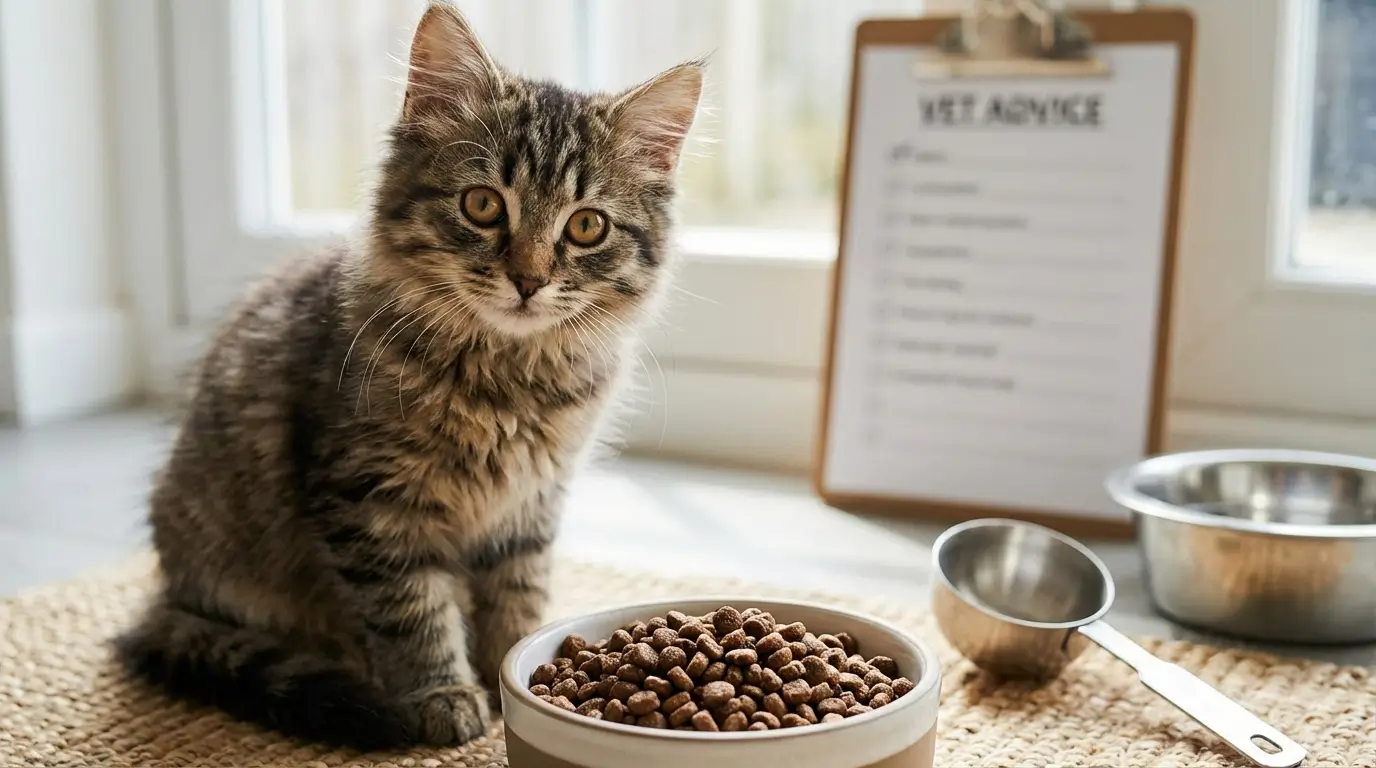
- Clear growth statement: Look for wording like “complete food for kittens” and “meets the nutritional requirements for growth”. That’s your first filter.
- High protein kitten food: At least ~35% crude protein on a dry matter basis from animal sources (poultry, meat, fish, egg). Kittens need more protein than adult cats to build muscle and organs.[1]
- Proper fat content: Around 18–25% fat on a dry matter basis to fuel their crazy energy and brain development.
- Taurine: Essential amino acid for heart and eye health. Make sure it’s listed in the analytical constituents or additives, ideally ≥ 0.1% on a dry matter basis.[1]
- Omega-3s (DHA/EPA): From fish oil or algae, important for brain and eye development in kittens.[4]
- Calcium and phosphorus: Balanced for growth; too much or too little can affect bones. Check that the food is formulated to recognised kitten standards (FEDIAF/AAFCO) rather than trying to juggle ratios yourself.[2]
Ingredients-wise, animal protein should be near the top of the list. Some carbohydrate is fine, but if the first ingredients are cereals or plant proteins, it’s not ideal for a carnivore. That said, a food doesn’t have to be grain free to be good; plenty of kittens do very well with small amounts of rice or maize as a binder.
If your kitten has suspected food allergies or chronic runny poos, you can ask your vet about hypoallergenic kitten food or veterinary diets – shop-bought “hypoallergenic” isn’t always as strict as it sounds.
Kitten food vs adult cat food: why it matters
Kitten bodies are in growth mode, not maintenance mode. Kitten food vs adult cat food comes down to energy and nutrients. Kittens need more calories, more protein and carefully balanced minerals per gram of food than an adult cat lounging on the sofa.[1]
Adult food is designed to maintain weight and prevent overfeeding. If you feed adult dry to a growing kitten, they may not get enough energy or nutrients unless they eat a huge volume of food, which their tiny stomach simply can’t manage. Over time, that can affect growth, immune function and overall condition.
On the flip side, feeding kitten food for too long can lead to unnecessary weight gain once their growth has slowed. Think of kitten food as a growth supplement built into every mouthful; once they’ve finished their main growth spurt, they don’t need that same turbo charge.
As a rough rule, keep your kitten on a suitable growth diet until at least 12 months old. Large breeds (like some Maine Coons) may stay on kitten food for 18 months or as guided by your vet.
When to switch kitten to adult food
The timing of when to switch kitten to adult food depends on age, body condition and activity level. Most average-sized indoor cats can move gradually to adult food between 12–14 months.
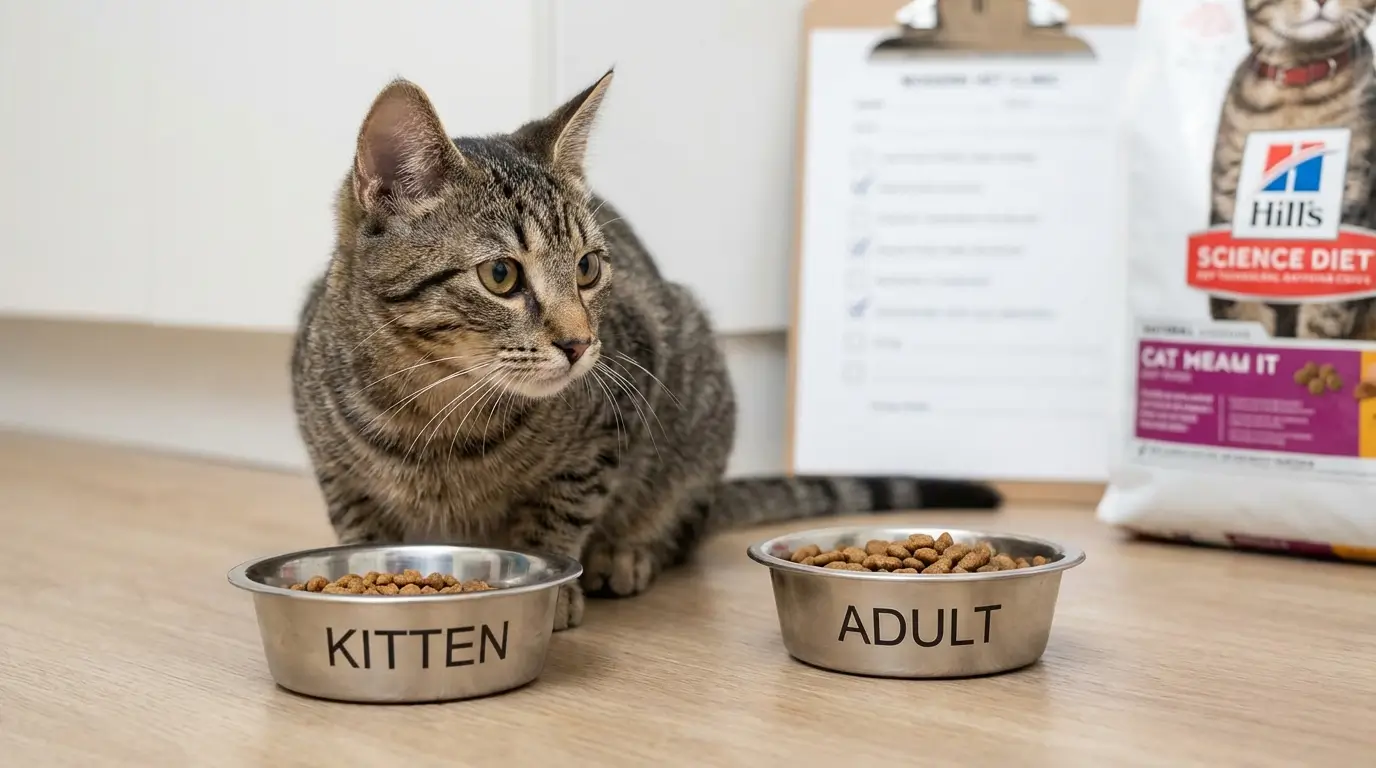
Signs your kitten is ready to transition:
- They’re around 1 year old (or as advised for their breed)
- The manic growth spurts have slowed and their weight has levelled out
- Your vet is happy with their body condition score (not ribby, not a chunky teenager)
Make the change slowly over 7–10 days:
- Days 1–3: 75% kitten food, 25% adult food
- Days 4–6: 50/50 mix
- Days 7–10: 25% kitten, 75% adult
If you see vomiting, soft stools or a total hunger strike, pause and stretch the transition out over a longer period. Sensitive tummies often cope better with a gradual change and sticking with one brand family if possible. If you’re noticing ongoing kitten digestion and diarrhoea issues, this is a point to speak to your vet rather than constantly swapping foods.
How much to feed a kitten: age, weight and schedule
How much to feed a kitten is where most people either underdo it or create a food-obsessed cat. The best starting point is the feeding chart on the bag, based on your kitten’s current weight and age. Then you tweak from there based on their body condition and energy level.
Very rough ballpark for dry food only (always check your specific food’s calories):
- 8–12 weeks (0.8–1.5 kg): 50–70 g per day, split into 4–5 small meals
- 3–6 months (1.5–3 kg): 60–80 g per day, split into 3–4 meals
- 6–12 months (3–4.5 kg): 60–75 g per day, split into 2–3 meals
This is only a guide. Some kittens burn through calories like a furnace, others are more laid-back. The key is to adjust by checking their body every couple of weeks:
- You should be able to feel – but not see – ribs
- There should be a slight “waist” when you look from above
- No pot belly or spine sticking out
A structured kitten feeding schedule helps: same times each day, food weighed out (not guessed), and uneaten food lifted after 20–30 minutes. Free-feeding a bored indoor kitten on energy-dense dry food is one of the quickest routes to an overweight adult cat.
Dry only, or mix wet and dry for kittens?
Whether you should feed only dry or mix wet and dry comes down to your kitten’s health, preferences and your routine. From a vet-style perspective, most kittens do best on a mixed diet:
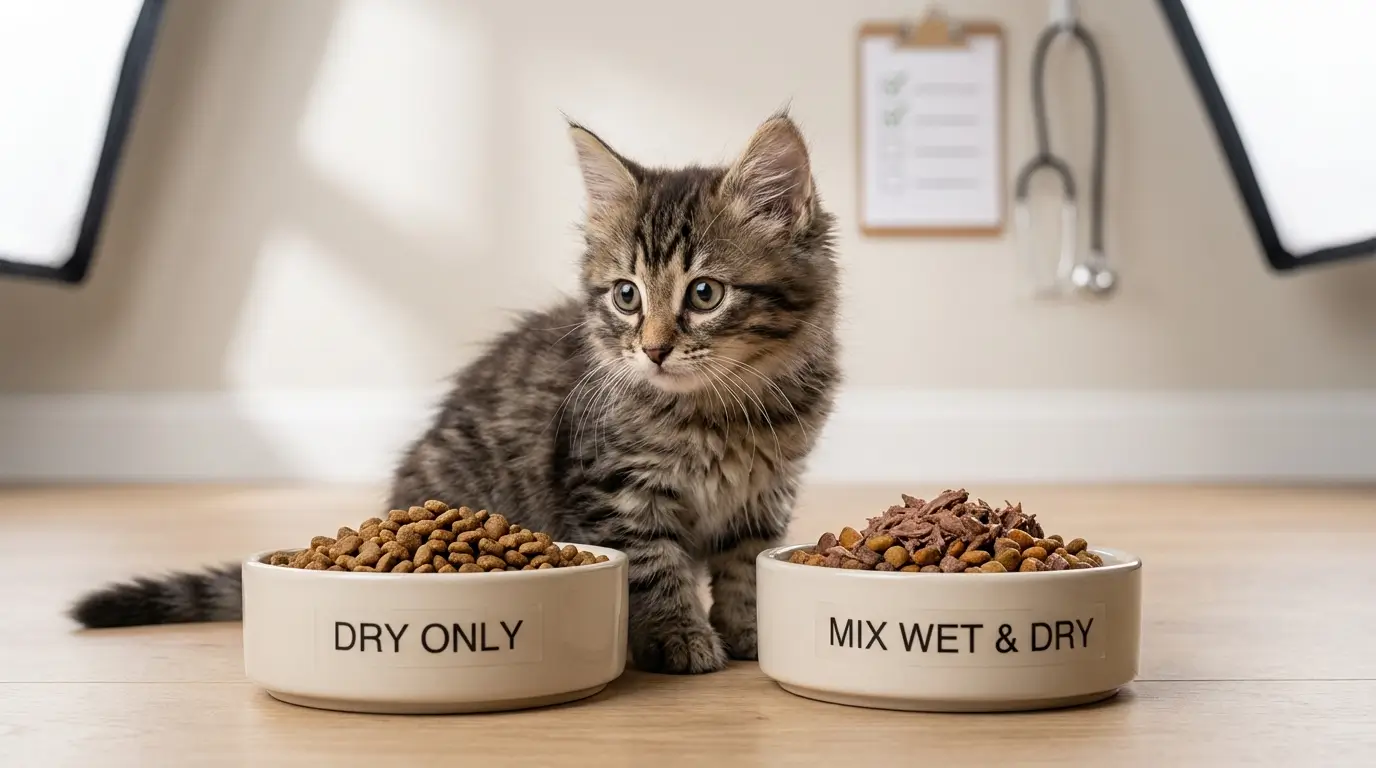
- Dry food offers convenience, dental abrasion (some, not a full dental clean) and a stable calorie source.
- Wet food boosts water intake, helps satiety with fewer calories and is often easier to digest for sensitive stomachs.[3]
If you go dry-only, you need to be extra sure your kitten drinks well and doesn’t have any urinary tract issues. Cats naturally have a low thirst drive, getting most of their water from prey or wet food in the wild.[3] For indoor kittens, a couple of wet meals a day can be a simple way to protect their future urinary health.
One approach that works for many busy owners is:
- Morning: wet kitten food
- Daytime: measured portion of kitten dry food offered in puzzle feeders
- Evening: wet food again, with a small dry top-up if needed
If your kitten has known allergies, IBS or chronic tummy issues, ask your vet before mixing brands or types. For some medical diets, you need to stick to one specific food.
Grain free, hypoallergenic and other label traps
Pet food marketing in Ireland and the UK is… enthusiastic. A few points worth keeping in mind when you’re hunting for the best dry cat food for kittens:
- Grain free kitten food isn’t automatically better. True grain allergies are uncommon in cats; most food reactions are to animal proteins.[5] Grain free foods can also be higher in other carbs like potatoes or peas.
- “Hypoallergenic” on supermarket foods is not a regulated medical term. If your vet suspects a food allergy, they’ll usually recommend a prescription or carefully chosen hypoallergenic kitten food with a single, novel protein or hydrolysed proteins.
- “With chicken” can legally mean there’s only a small percentage of chicken. Check the actual meat percentage in the ingredients list.
- “Natural” isn’t a guarantee of nutritional balance. A perfectly “natural” food that misses taurine or has skewed calcium can be dangerous for kittens.
Instead of chasing buzzwords, prioritise: complete & balanced for growth, good quality animal protein, your kitten’s tolerance (no vomiting or diarrhoea), and a healthy weight and coat. If those boxes are ticked, you’re doing well.
For more on reading labels and tummy upsets, you might find our pieces on kitten diarrhoea causes and fixes and keeping your cat at a healthy weight handy.
When to call the vet about kitten food issues
Most minor tummy wobbles during food changes settle within a day or two. But there are times to stop experimenting with diets and get your vet involved:
- Diarrhoea lasting more than 24–48 hours
- Blood in stool or black, tarry poo
- Repeated vomiting, especially if they’re not keeping water down
- Refusing food for more than 12 hours in a young kitten
- Sudden weight loss, bloating, or severe lethargy
Kittens can go downhill quickly. If you’re unsure whether it’s “just the food” or something more, err on the side of caution and ring your local vet. They can also help you choose a specific diet if you’re dealing with allergies, IBD, or growth concerns.
Bringing it all together
Choosing the best dry cat food for kittens doesn’t need to be an endless scroll through marketing claims. Focus on a complete, growth-formulated diet with high-quality animal protein, balanced minerals and added taurine and omega-3s. Feed little and often, weigh the food, and keep a close eye on body condition rather than the back of the bag alone.
Most kittens do brilliantly on a mix of wet and dry, a sensible kitten feeding schedule, and slow, deliberate food changes. If something feels off – constant hunger, tummy upsets, or worry about how much your kitten is eating – have a chat with your vet and bring the food bag along. A ten-minute check now can save you and your cat a lot of hassle down the road.
References: [1] AAFCO Dog and Cat Food Nutrient Profiles; [2] FEDIAF Nutritional Guidelines for Complete and Complementary Pet Food; [3] WSAVA Global Nutrition Toolkit; [4] National Research Council, Nutrient Requirements of Dogs and Cats; [5] BSAVA Manual of Canine and Feline Dermatology.

5 Common Dog Health Problems

10 Best Irish Pet Rescues 2024

Indoor Cat Risks in Irish Homes